
Last updated November 23, 2026
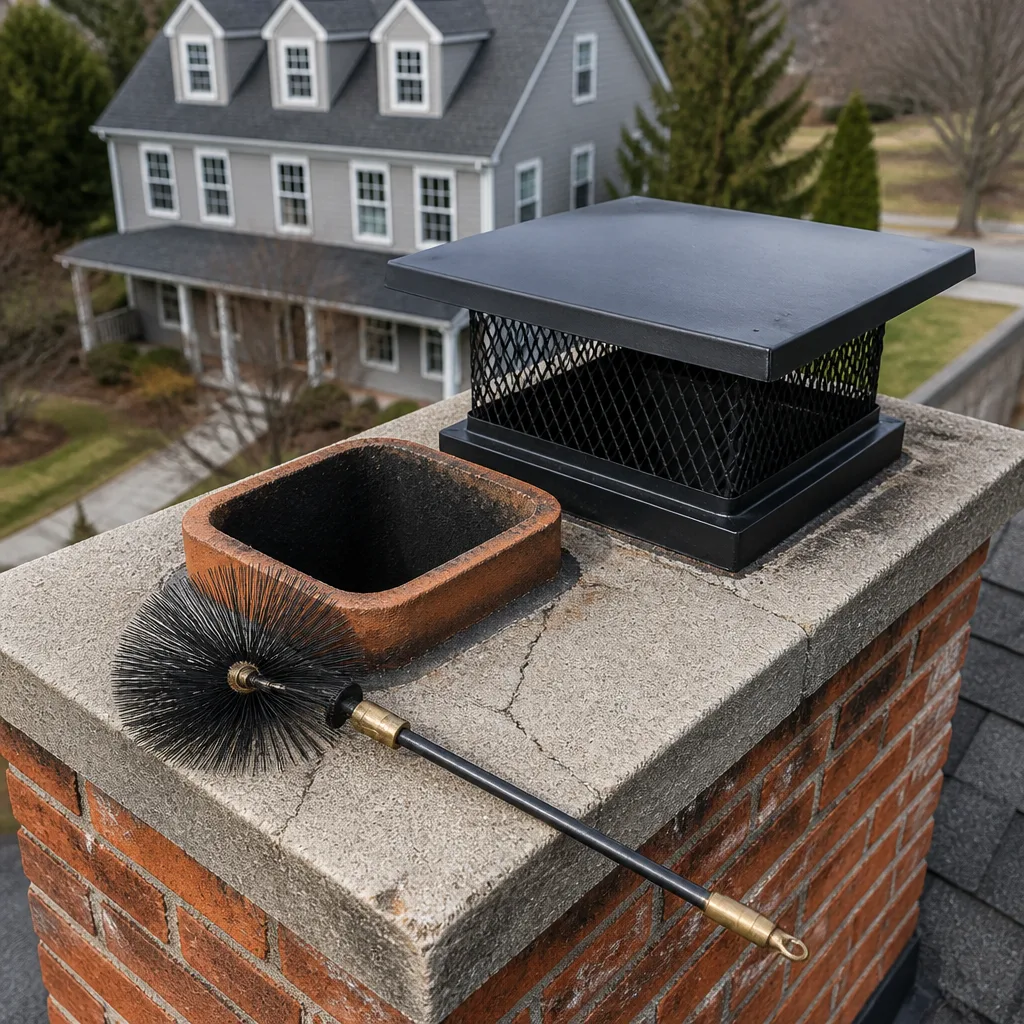 Sweep & inspection
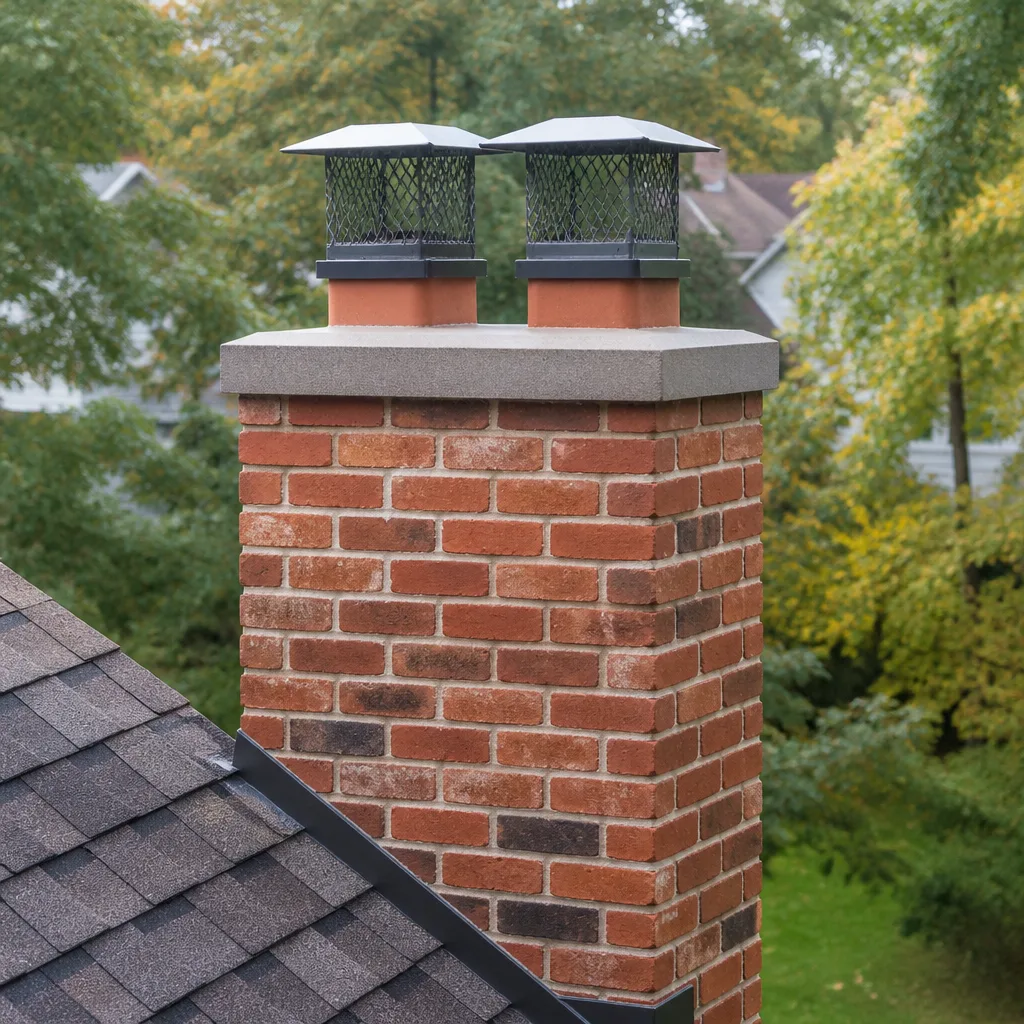 Caps & crowns
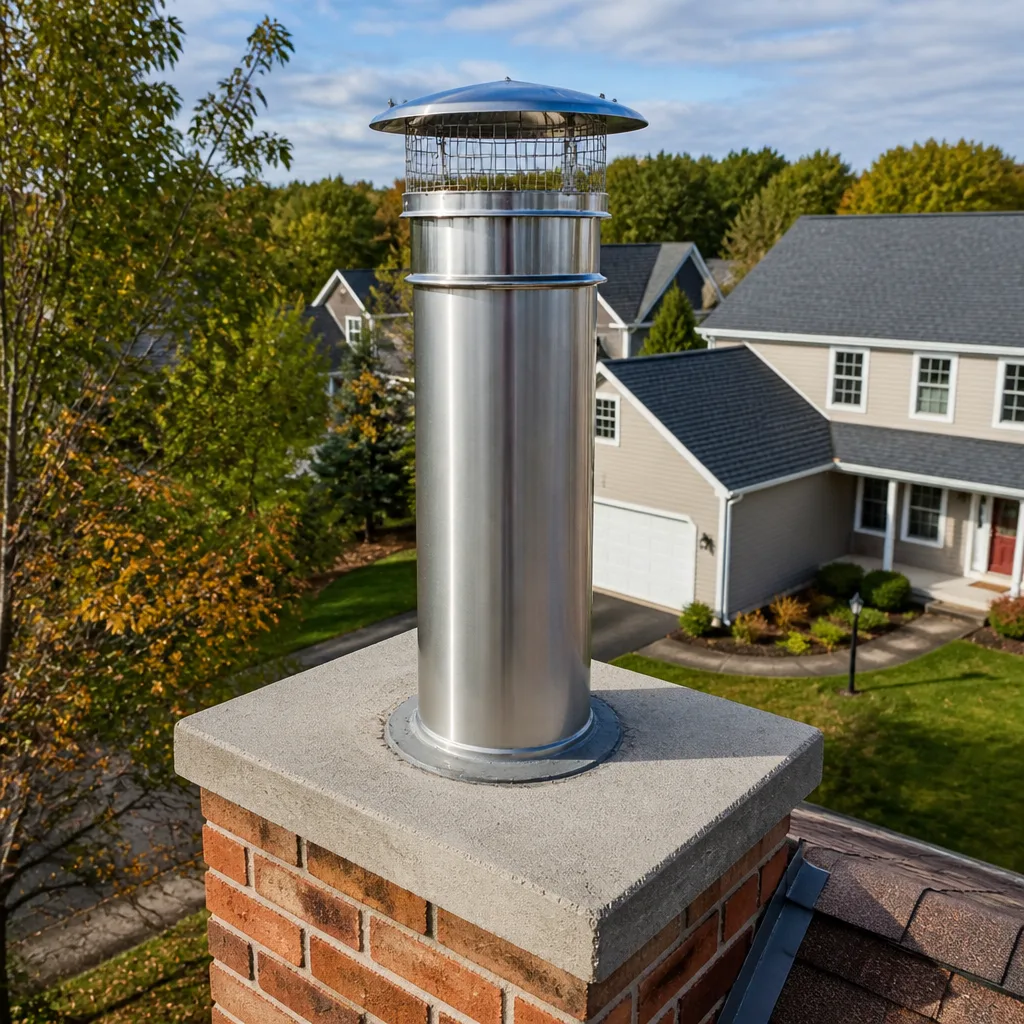 Flue relining
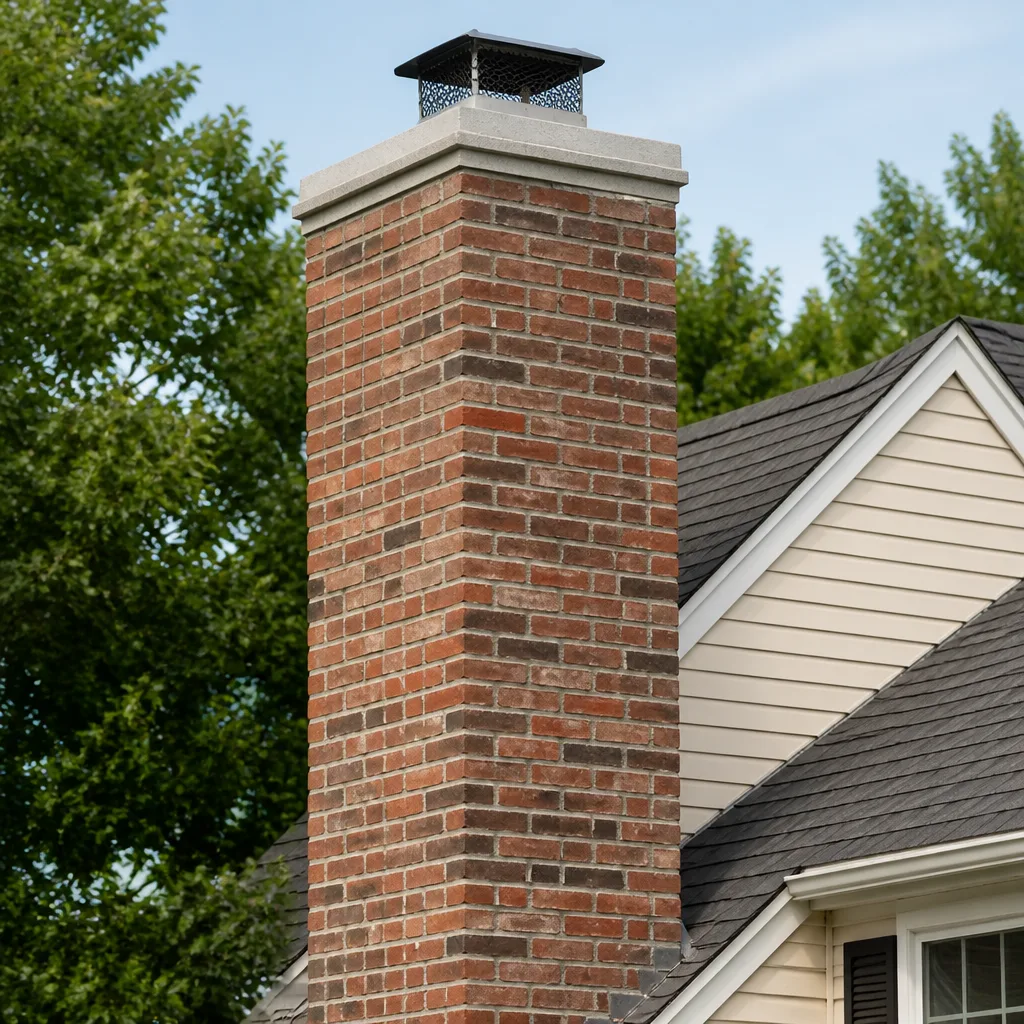 Masonry repair
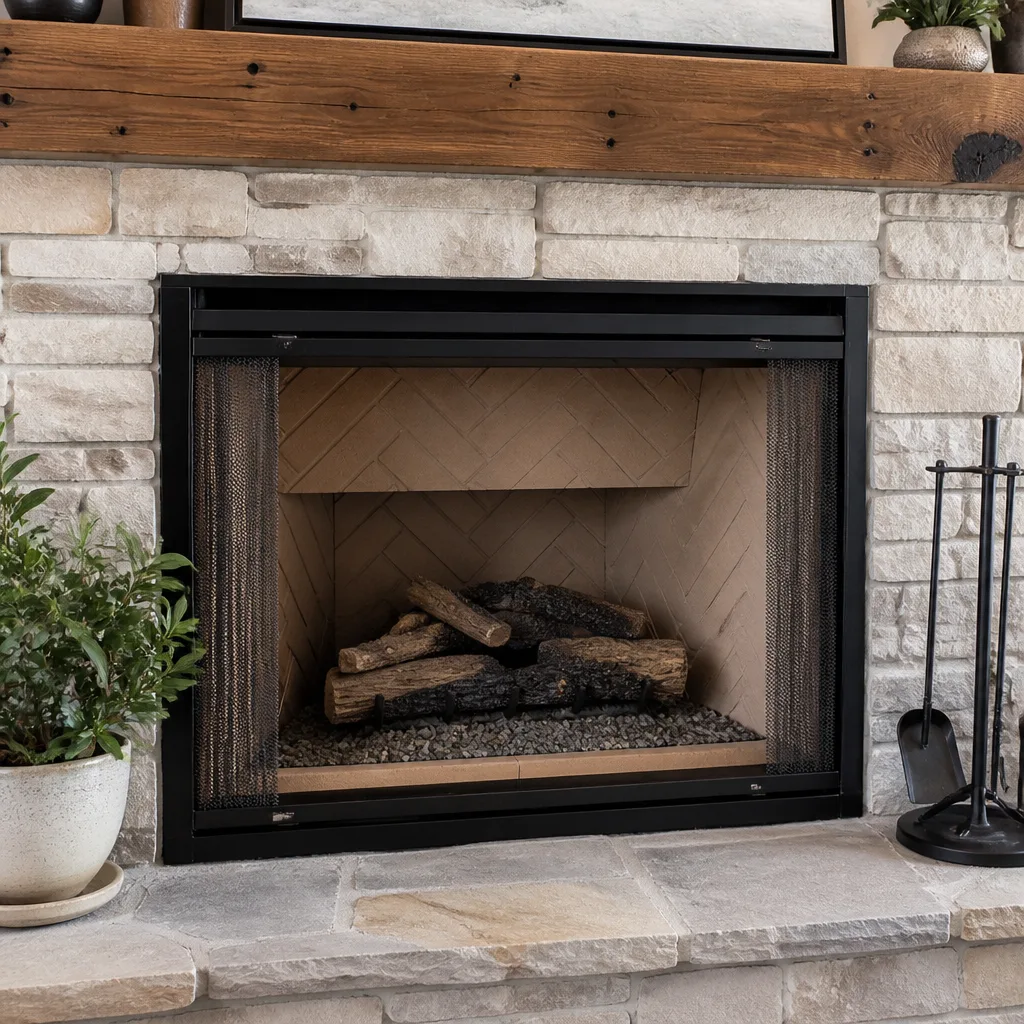 Gas fireplace service
Level 1 sweep and inspection to the NFPA 211 annual standard - flue, crown, cap, and flashing checked and photographed
Chimney sweep logs do not sweep chimneys. They loosen some creosote - which then falls where a brush and vacuum still have to collect it.
The Complete Guide to Chimney Cleaning in Boulder
Most chimney advice you’ll read was written for a house at sea level burning dense hardwood. Boulder isn’t that house. At 5,430 feet, the air is thinner, combustion is less complete, and a fire that would burn cleanly in Denver leaves more behind in a Boulder flue. Add the pine and beetle-kill wood that fills so many woodpiles around Boulder County, the dry chinook winds that shove smoke back down the chimney, and a burn season that can run from October into May, and you have creosote conditions that generic guides never mention. This guide explains how cleaning actually works in Boulder, what a real sweep includes, and how to tell whether the work you’re being sold is genuine.
Quick Answer
Chimney cleaning in Boulder means removing creosote, soot, and ash from the entire system – flue, smoke chamber, firebox, and damper – then inspecting every component for damage. It should be done when the flue has about 1/8 inch of creosote buildup, or once a year if you burn regularly. Because Boulder’s altitude and local fuel supply speed up creosote formation, many Boulder homes need attention more often than the national “once a year” rule suggests.
Styles & brands we work with
- Sweep & inspection
- Caps & crowns
- Flue relining
- Masonry repair
- Gas fireplace service
Table of Contents
- How Boulder’s Altitude Changes Chimney Cleaning
- Pine, Beetle-Kill Wood, and Creosote in Boulder County
- The Three Levels of Chimney Inspection
- Chinook Winds, Negative Draft, and Glazed Creosote
- What a Full-System Cleaning Actually Includes
- How Often Should You Clean Your Chimney in Boulder?
- What Chimney Cleaning Costs in Boulder
- Why DIY Sweeping Falls Short
How Boulder’s Altitude Changes Chimney Cleaning
At 5,430 feet, Boulder sits high enough that combustion is measurably less complete than at sea level. Thinner air holds less oxygen per cubic foot, so a fire that looks healthy is often running rich – producing more unburned gases that condense on the cooler walls of the flue as creosote. This is the single biggest reason chimney cleaning in Boulder isn’t the same job as chimney cleaning in a lowland city.
Three things follow from that:
- More creosote per cord. The same fireplace, burning the same amount of wood, deposits more creosote here than it would in Denver or a coastal city. That buildup accumulates faster than the calendar suggests.
- Stage 2 creosote arrives sooner. Creosote moves through stages – light soot and flaky Stage 1, then hardened Stage 2, then glazed Stage 3. At altitude, the jump from Stage 1 to Stage 2 happens in fewer burns.
- Draft is less forgiving. A shorter effective chimney column and thinner air mean weaker natural draft. Weak draft means smoke lingers, cools, and deposits more of what it carries.
A chimney that’s swept on a sea-level schedule in Boulder can quietly cross into Stage 2 buildup before the homeowner notices anything wrong. That’s why we inspect as well as sweep, and why our technicians – with up to 14 years of experience – read the flue rather than just the calendar when deciding what a Boulder chimney needs. If you want the sweep itself, our chimney sweep page covers exactly what’s included.
Pine, Beetle-Kill Wood, and Creosote in Boulder County
What you burn matters as much as how you burn it. Boulder County woodpiles lean heavily on pine and beetle-kill conifer, and that fuel behaves differently from seasoned hardwood. It’s not that pine is dangerous – it’s that pine and beetle-kill wood produce a different creosote profile, and a chimney guide that assumes oak and maple will get the cleaning frequency wrong.
Here’s the difference in plain terms:
- Pine burns hot and fast, then cools. The rapid heat spike followed by a cooldown is exactly the pattern that lets creosote condense. Slow, steady hardwood fires keep the flue warmer and deposit less.
- Beetle-kill wood can be drier than kiln-dried lumber. Standing dead trees lose moisture fast, and over-dry wood burns so quickly that flue temperatures swing. A flue that heats and cools repeatedly builds creosote in layers.
- Resin content matters. Conifers carry resin that contributes to a stickier, more gummy deposit. That gummy layer is harder to brush off once it cures.
None of this means you should stop burning pine or beetle-kill wood. It means the same chimney that could coast two seasons on hardwood might need annual – or more frequent – cleaning on a pine-heavy diet. When we sweep a Boulder County chimney, the creosote type tells us a lot about the fuel, and the fuel tells us how soon to come back. If you’re noticing flue damage alongside the buildup, that’s a chimney repair conversation, not just a cleaning one.
The Three Levels of Chimney Inspection
Understanding the inspection levels is the single most useful thing a homeowner can learn, because it tells you exactly what you’re buying. The NFPA 211 standard defines three levels of chimney inspection, and each answers a different question.
- Level 1 – Routine inspection. A visual check of the accessible parts of the chimney and firebox, done alongside a cleaning when nothing has changed since the last visit. This covers what you can see looking up the flue and into the firebox. It’s what most annual cleanings include.
- Level 2 – The standard for most situations. This adds a video camera scan of the flue interior, so the technician can see cracks, gaps, and creosote the eye can’t reach. A Level 2 is called for after a chimney fire, when you’ve changed fuel type or appliance, when a property changes hands, or when you’re adding a new liner.
- Level 3 – Investigative. When a Level 1 or 2 turns up a problem that can’t be resolved without opening things up, a Level 3 may involve removing parts of the chimney or crown to see what’s behind them. It’s the most involved and the least common.
When a Boulder homeowner schedules a cleaning, what they usually want is a Level 1 cleaning plus a Level 2 video inspection. That camera scan is what lets us tell you honestly whether your flue is fine or failing – and whether that liner you’ve been told you need is actually necessary. We include the camera scan and a photo report of what it shows, so there’s no mystery about what we’re recommending or why.
Chinook Winds, Negative Draft, and Glazed Creosote
Boulder’s chinook wind events are famous for a reason, and they do something specific to chimneys. A strong wind across the top of a chimney can create negative pressure – a downdraft – that pushes smoke back down the flue instead of pulling it up and out. When that happens, smoke cools in the lower flue and deposits its creosote there, in the coldest, hardest-to-reach section.
The effect is a form of chimney wear that lowland cities simply don’t see. It shows up in a few recognizable ways:
- Smoke in the room during gusts. If your fireplace spills smoke when the wind picks up, draft is being reversed.
- Glazed creosote low in the flue. Creosote that’s deposited in a cooling, downdrafting flue hardens into Stage 3 glazing much faster than creosote higher up.
- Cold, sooty smell after wind events. The same reverse draft that deposits creosote also deposits odor.
There’s no setting here that “fixes” the wind. What helps is a properly sized and capped chimney, correct flue height above the roof, and a flue that’s clean enough to draft well even on a breezy day. That’s one reason we install Gelco and Famco caps and ventilation hardware from professional supply brands – a correct cap helps manage the airflow the chinook disrupts. Our full service line covers fireplace repair as well, since a firebox that leaks air makes draft problems worse.
What a Full-System Cleaning Actually Includes
If a “cleaning” touches only the flue, it’s theater. The flue is where most of the creosote lives, but the whole chimney accumulates soot and ash, and skipping the other parts leaves the safety margin thin. A full-system cleaning in Boulder covers the firebox, damper, smoke chamber, flue, and crown – every part of the system. Here’s what that looks like in order.
- Drop cloths and setup. The work area gets sealed off before any dust moves. This is basic, and it tells you something about how seriously the company takes the home.
- Firebox and damper. Soot and ash are cleared from the firebox floor and walls, and the damper is checked to confirm it opens and closes cleanly.
- Smoke chamber. The smoke chamber is the tapered space above the damper that funnels smoke into the flue. It’s a creosote trap when it’s rough or dirty, so it gets brushed and inspected.
- Flue. The flue is swept from the roof or from below, depending on the setup, and the creosote is removed to bare metal or clay. A video camera scan follows.
- Crown and cap. The crown – the concrete top of the chimney – is checked for cracks, and the cap is checked for fit and damage. A missing or damaged cap lets water and animals in.
Every step matters because a chimney is a system, not a tube. A clean flue attached to a cracked crown still lets water damage the structure. A swept flue above a sooty smoke chamber still traps creosote. We service the whole chimney – from the firebox to the cap – because the parts you can’t see are the ones that fail. If you’re comparing companies, ask what their sweep includes; the answer tells you a lot. You can also start with our Chimney Sweep Boulder page to see how we approach the full system.
How Often Should You Clean Your Chimney in Boulder?
The national rule is once a year. In Boulder, that’s a starting point, not a promise. Frequency depends on how much you burn, what you burn, and how your particular chimney drafts. A gas fireplace used a few evenings a month needs far less attention than a wood stove burning pine through a five-month season.
A practical guide for Boulder homeowners:
- Occasional gas fireplace: annual inspection; cleaning as the inspection indicates.
- Regular wood burning, seasoned hardwood: sweep at least once a year, more if you burn daily.
- Regular wood burning, pine or beetle-kill: sweep annually at minimum, and inspect mid-season for Stage 2 buildup.
- Heavy burning or any chimney fire history: more frequent cleaning and a full Level 2 inspection.
The 1/8-inch rule is the one most technicians work from: when creosote reaches about 1/8 inch thick, it’s time to sweep. You can check this by looking up the flue when the chimney is cold, though a camera does it better. If you can’t tell, that’s a reason to book a sweep, not a reason to wait. In our experience, Boulder chimneys tend to surprise homeowners with how fast they build up – not because anything’s wrong, but because of the altitude and the fuel. Talk to our team and we’ll tell you honestly whether your chimney can safely wait a season.
What Chimney Cleaning Costs in Boulder
Chimney cleaning costs vary by what’s actually needed, but the honest way to think about it is that the price should be set by a written estimate after someone has looked, not by a phone number. A straightforward sweep costs less than a sweep plus a video inspection, which costs less than a sweep plus liner repair. Here’s the typical structure, item by item.
| Service | Typical Range | What It Covers |
|---|---|---|
| Standard chimney sweep | Entry-level range | Flue, firebox, damper, smoke chamber cleaning |
| Sweep plus Level 2 video inspection | Mid range | Cleaning plus camera scan and photo report |
| Chimney cap installation | Mid range | Gelco or Famco cap fitted to the flue |
| Crown repair | Higher range | Crack repair or rebuild of the chimney top |
| Flue resurfacing (HeatShield) | Higher range | Ceramic resurfacing of a deteriorated liner |
| Full relining (DuraFlex stainless) | Highest range | New flexible stainless-steel liner system |
Notice what’s not in that table: a pressure price on repair work before anyone has seen the flue. The estimate is free, the price is set per job by the written estimate, and we don’t sell a reliner to a chimney that only needs resurfacing. HeatShield ceramic resurfacing, which we’re authorized to use, can restore a deteriorated flue liner without a full reline – a less invasive, lower-cost option that not every company offers. When a full reline is the right call, we source DuraFlex stainless-steel systems, a product professional installers rely on for longevity and code compliance. Call (855) 658-5187 for an exact quote – estimates are free.
Why DIY Sweeping Falls Short
A brush and a ladder look like enough to sweep a chimney. They aren’t, and it’s worth being concrete about why. The parts that matter most in a Boulder chimney – the smoke chamber and the upper flue – are exactly the parts a homeowner can’t reach or see from below. You can knock soot off the visible flue and still leave a glazed Stage 3 layer in the section that caused the original problem.
More importantly, sweeping is inspection. A technician sweeping a flue is also reading it: cracks in the clay tile, gaps at the joints, a crown that’s failed, a damper that doesn’t seal. Doing it yourself means doing the brushwork without the diagnosis, which is the part that actually keeps the chimney safe. And the creosote conditions we see in Boulder – the glazed lower flue from chinook downdrafts, the Stage 2 buildup from pine – are exactly the conditions that benefit from professional eyes. Tools from Olympia Chimney and Copperfield are what a professional sweep uses for good reason, and none of them take the place of experience. If a sweep turns up something structural, that’s when we talk about repair rather than cleaning. When it’s time to book, our chimney sweep service in Boulder is the place to start.
Common Mistakes to Avoid
- Waiting for a chimney fire to act. By the time you’ve had a fire in the flue, the creosote has already been through Stage 3. Don’t wait for the warning to become an event.
- Assuming once-a-year covers it. The national rule doesn’t account for Boulder’s altitude or a pine-heavy fuel supply. Get the flue looked at mid-season if you burn a lot.
- Buying a sweep that skips the smoke chamber. A flue-only cleaning leaves a creosote trap above the damper. Ask what the price includes before you book.
- Skipping the Level 2 camera scan. A visual inspection can’t see a cracked tile inside the flue. If you’re told you need a reliner, ask to see the camera footage.
- Burning green or beetle-kill-heavy wood without adjusting frequency. The fuel changes the creosote profile. If you change fuel, shorten the inspection interval.
- Ignoring the crown and cap. A cracked crown lets water into the chimney structure, and a missing cap lets animals and rain in. Both are cheaper to fix early.
- Treating a gas fireplace as maintenance-free. Even gas fireplaces benefit from a look at the flue and venting. It’s an inspection, not a cleaning, but it matters.
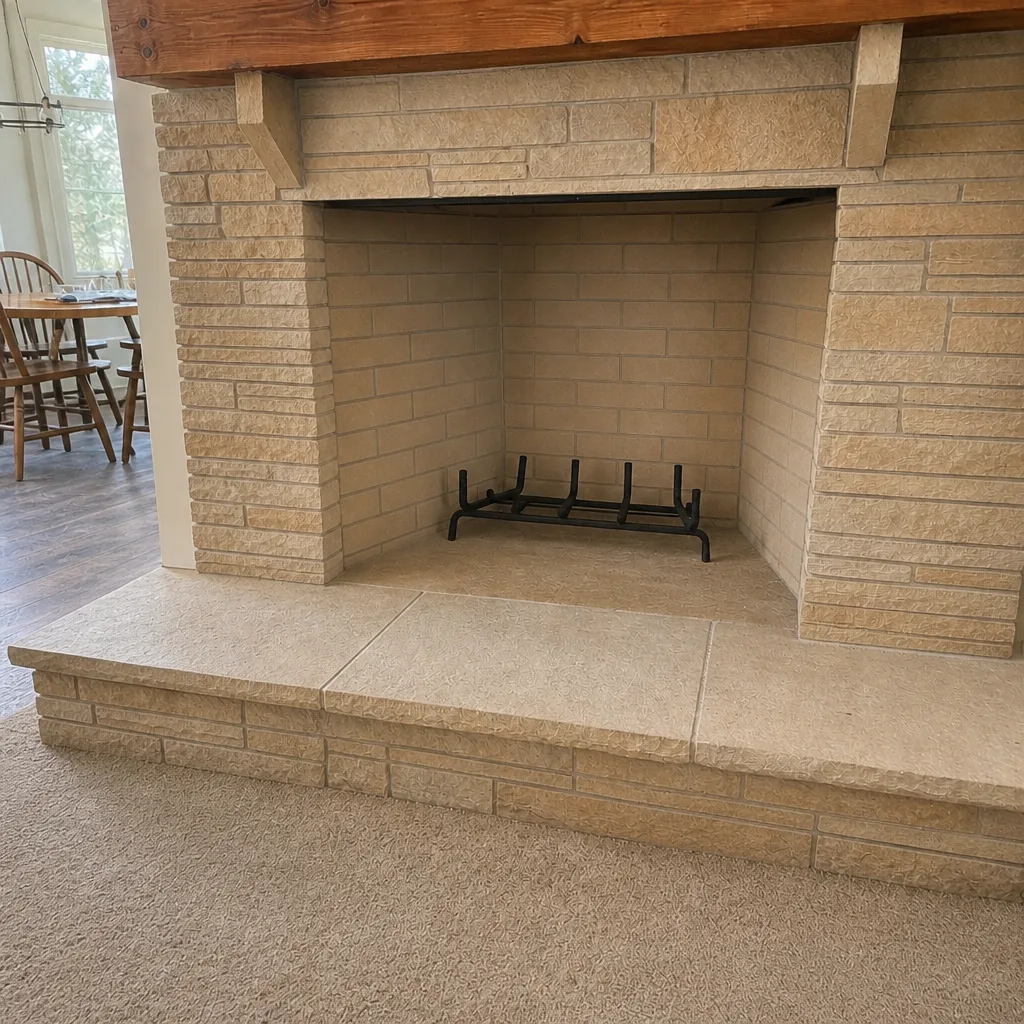
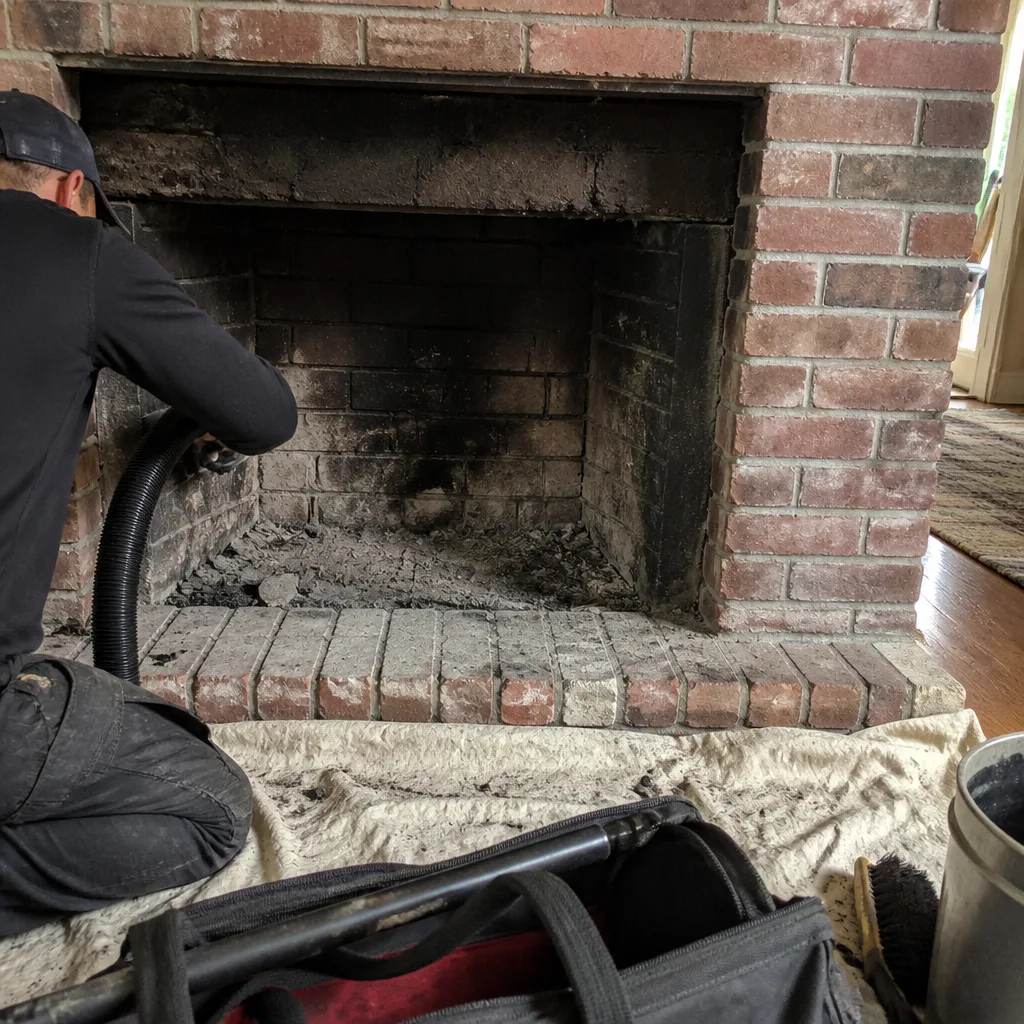
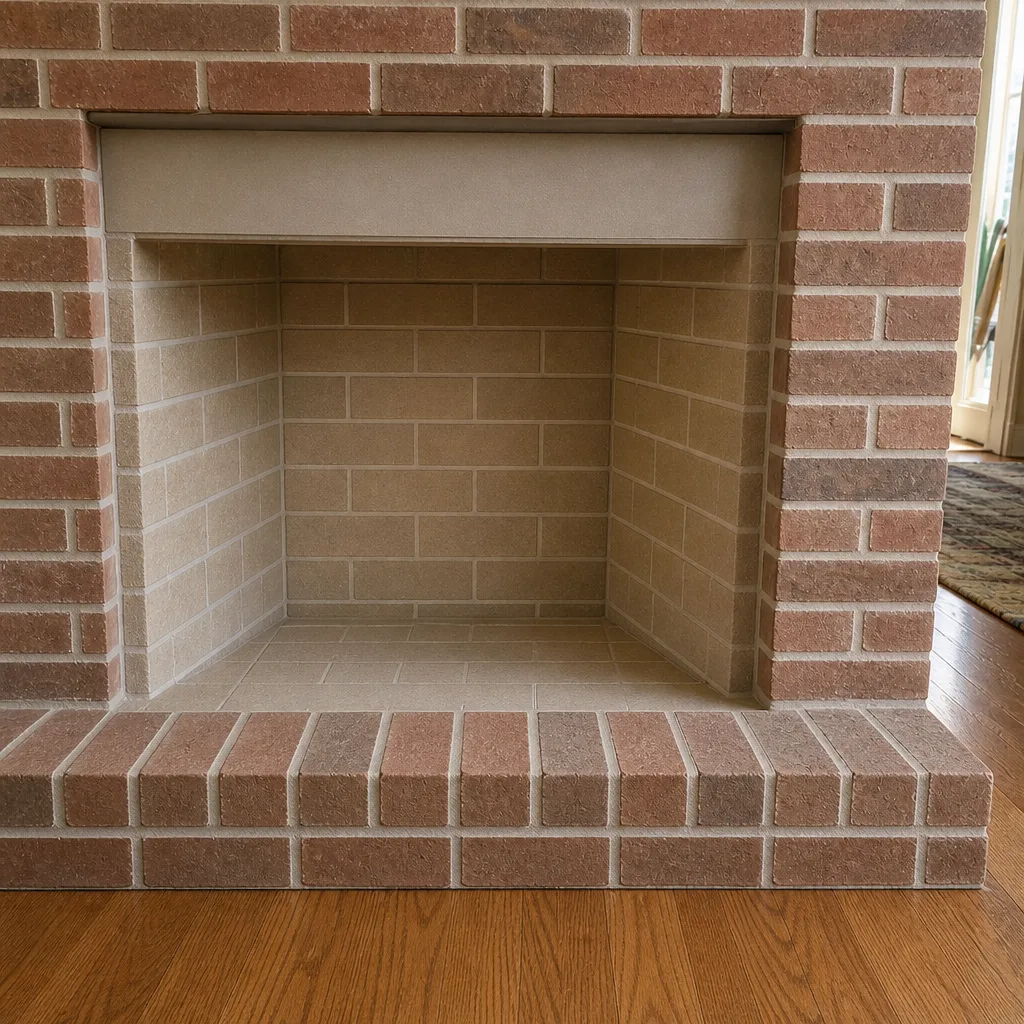
See the difference
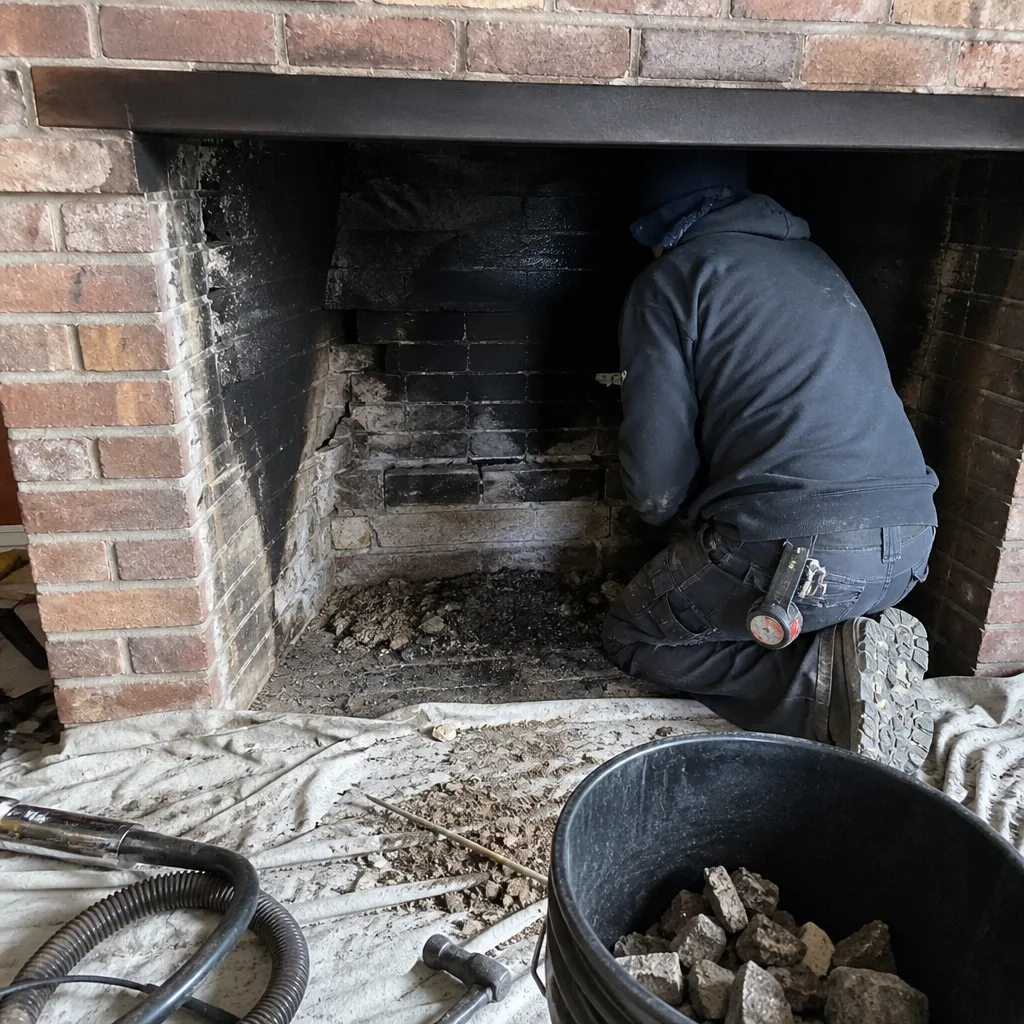 Before
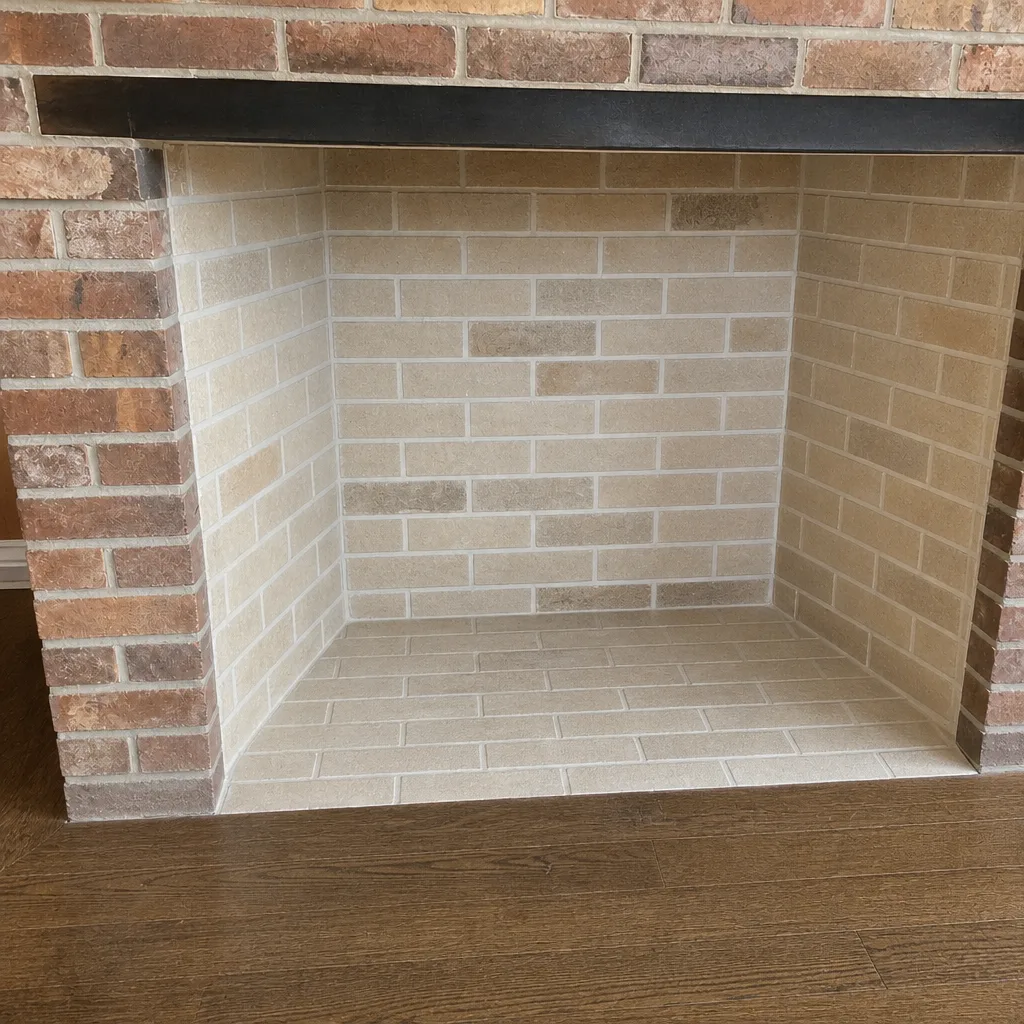 After
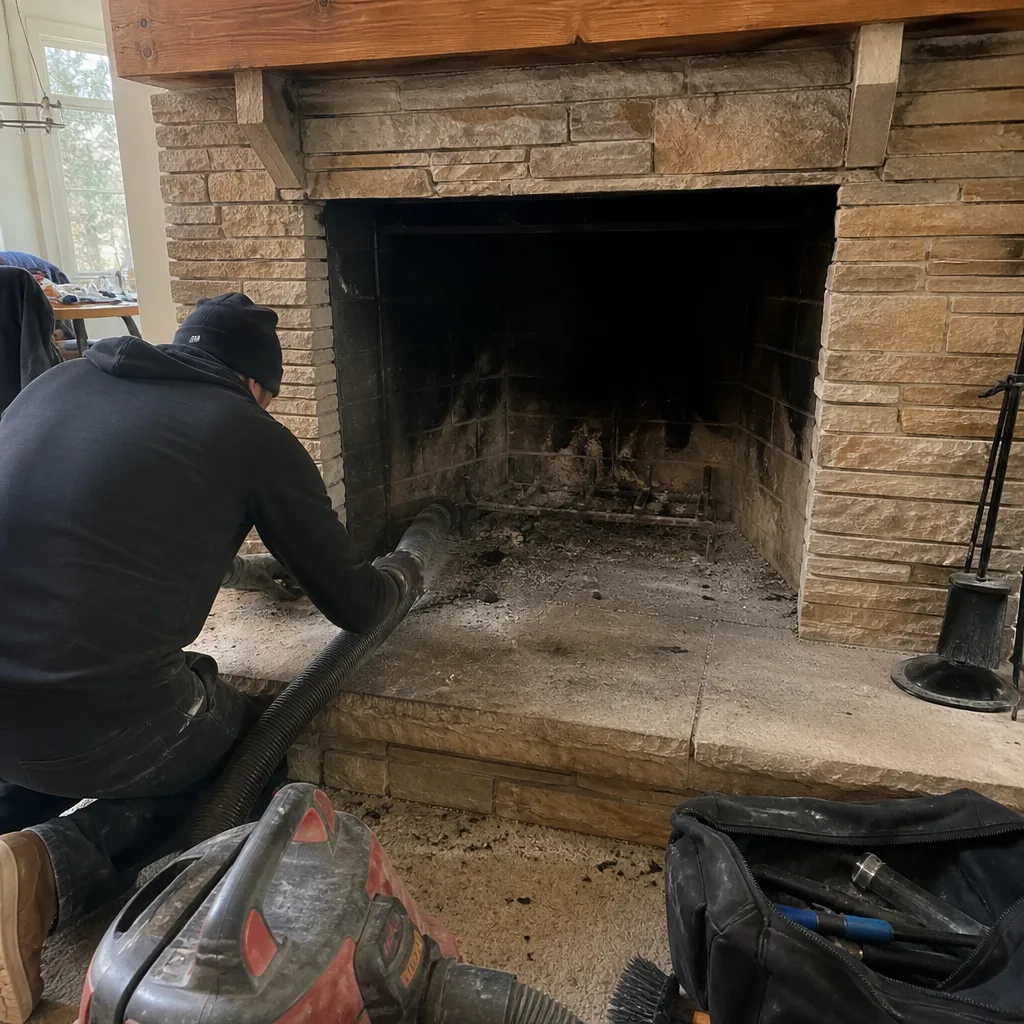 Before
 After
 Before
 After
When to Call a Professional
Some situations are clearly a professional’s job, no debate. Call a chimney professional if you smell smoke in the house during gusts, if you’ve had a chimney fire of any size, if creosote has built to Stage 2 or Stage 3, if the crown or cap is damaged, or if you’re buying or selling a home and need a Level 2 inspection. Call too if you’ve never had the chimney inspected and don’t know its history. And call if a company has quoted you liner or masonry work without showing you camera footage – you’re entitled to see the evidence before you spend the money. Chimney Sweep Boulder offers free estimates in Boulder – call (855) 658-5187. We answer 24/7. Fast dispatch from 7am to 7pm, Sunday through Friday.
Frequently Asked Questions
A standard sweep sits in the entry-level range, and a sweep plus a Level 2 video inspection sits in the mid range; the final price is set by a written estimate after we’ve looked at your chimney. The estimate is free, so there’s no reason to guess. Call (855) 658-5187 for an exact quote – estimates are free.
Not necessarily. A deteriorated flue liner can sometimes be restored with HeatShield ceramic resurfacing, which is less invasive and less expensive than a full reline. We only recommend a DuraFlex reline when the damage is beyond resurfacing, and we show you the camera footage so you can decide. Call (855) 658-5187 for an exact quote – estimates are free.
At least once a year for regular wood burners, more often if you burn pine or beetle-kill wood, because Boulder’s altitude and local fuel speed up creosote formation. The 1/8-inch creosote rule is the practical trigger, not the calendar. Call (855) 658-5187 for an exact quote – estimates are free.
Creosote keeps building – from Stage 1 to Stage 2 to glazed Stage 3 – and the risk of a chimney fire rises with it. Carbon monoxide can also back up if the flue is blocked. Neither is a reason to panic, but it is a reason to book a sweep. Call (855) 658-5187 for an exact quote – estimates are free.
Chinook wind events create negative pressure at the top of the chimney, which reverses draft and pushes smoke back down. A correct cap, proper flue height, and a clean flue all help. We can check your draft and cap when we sweep. Call (855) 658-5187 for an exact quote – estimates are free.
A sweep removes creosote; an inspection evaluates the condition of the system, and a Level 2 adds a video camera scan of the flue. Most Boulder homeowners want both together, which is what we include.
No. Gas fireplaces still have venting that should be inspected annually, even though they build up far less creosote than wood. It’s a quick check, and worth doing. Call (855) 658-5187 for an exact quote – estimates are free.
The Bottom Line
Chimney cleaning in Boulder isn’t the same job it is at sea level. Thinner air means less complete combustion, pine and beetle-kill wood mean a stickier creosote profile, and chinook winds mean glazed buildup low in the flue. Sweep on the 1/8-inch rule rather than the calendar, get a Level 2 camera inspection so you know what’s actually going on inside the flue, and make sure your cleaning covers the smoke chamber, firebox, damper, and crown – not just the flue. When work is recommended, ask to see the evidence. That’s the difference between a clean chimney and a safe one. Call (855) 658-5187. We answer 24/7. Fast dispatch from 7am to 7pm, Sunday through Friday.
Written by the team at Chimney Sweep Boulder.