
Last updated November 23, 2026
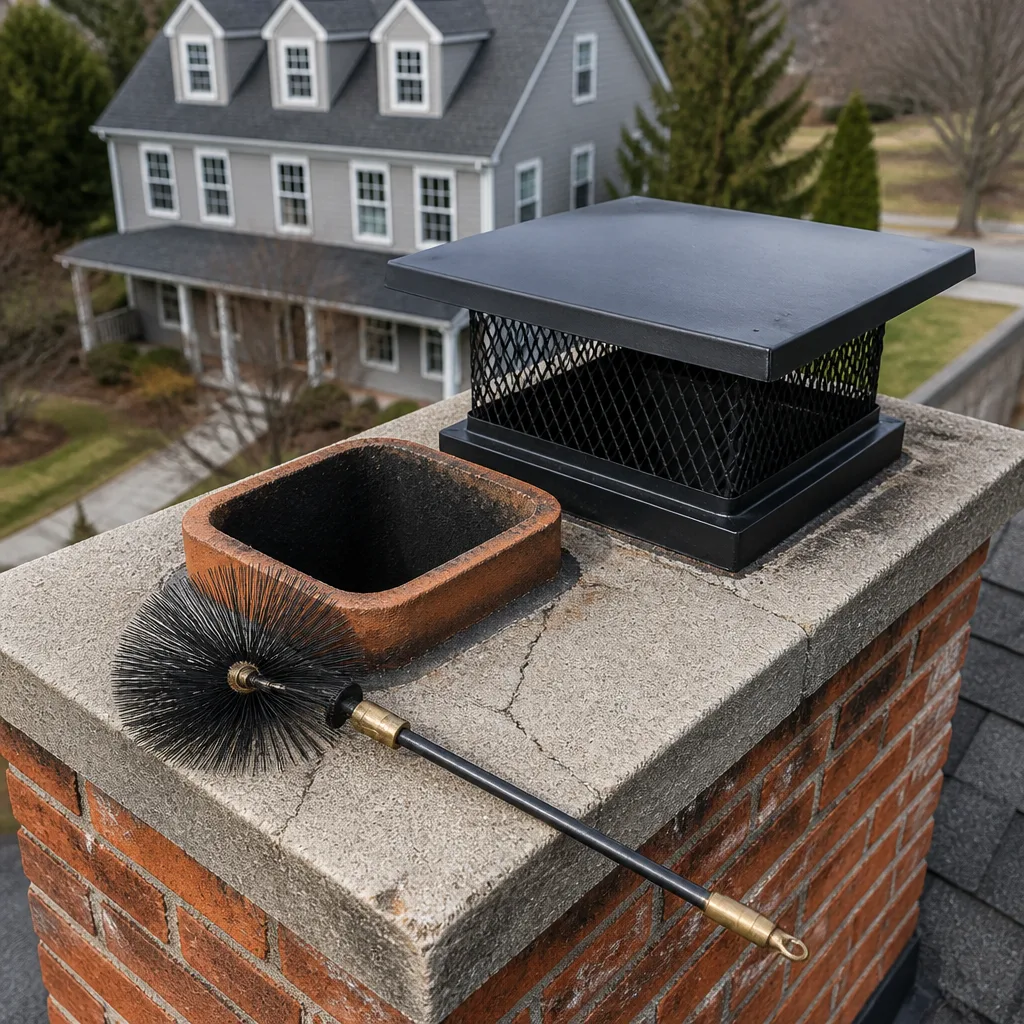 Sweep & inspection
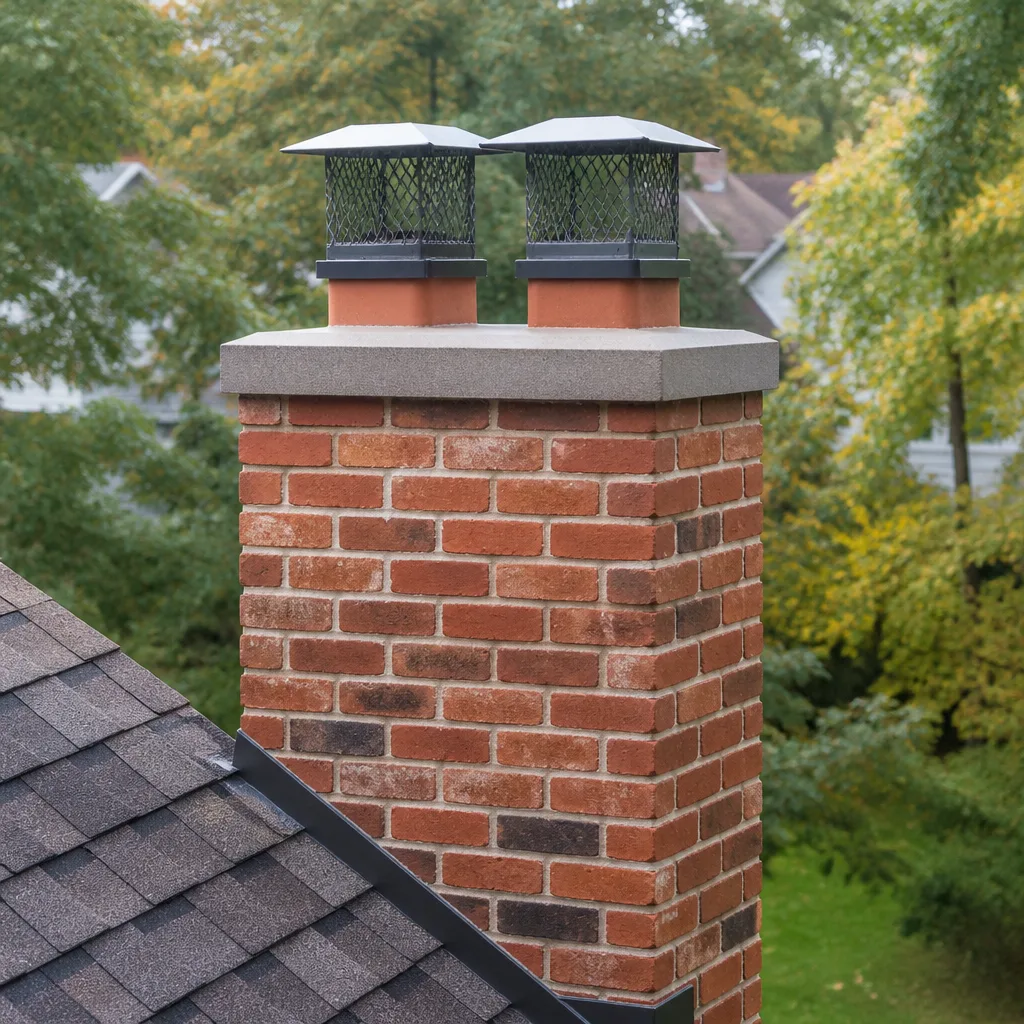 Caps & crowns
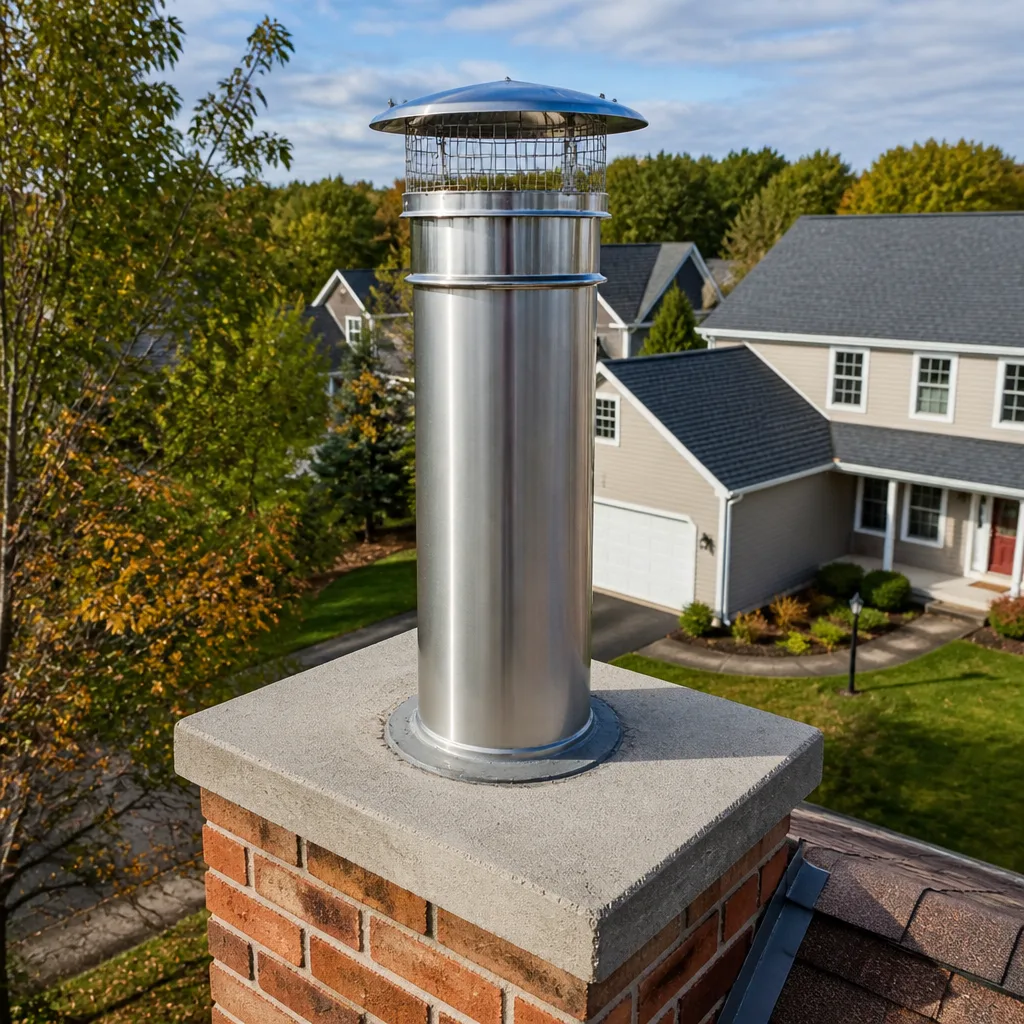 Flue relining
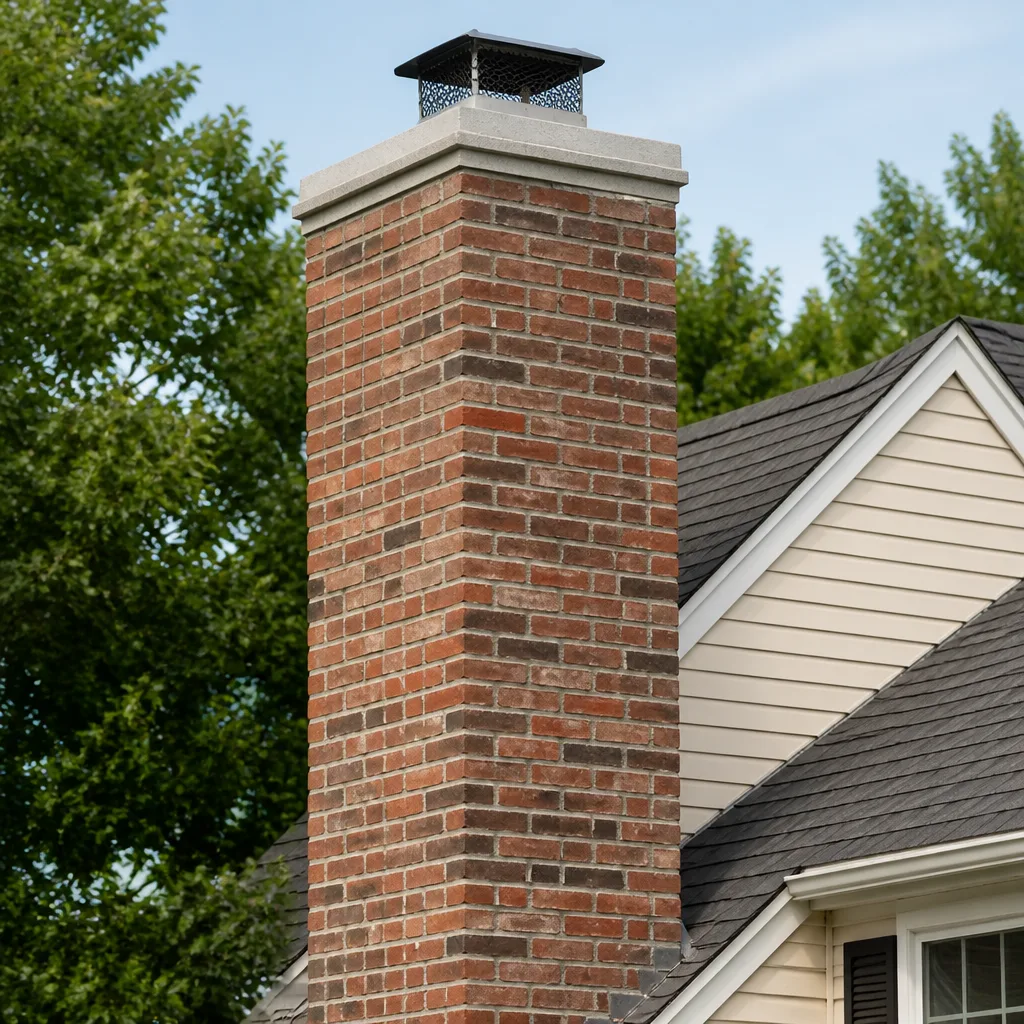 Masonry repair
 Gas fireplace service
Level 1 sweep and inspection to the NFPA 211 annual standard - flue, crown, cap, and flashing checked and photographed
Chimney sweep logs do not sweep chimneys. They loosen some creosote - which then falls where a brush and vacuum still have to collect it.
Chimney Cleaning Warning Signs: A Boulder Homeowner’s Reference Guide
Most warning-sign articles hand you a list: smoke in the room, a bad smell, black streaks on the wall. That approach tells you a symptom is present. It doesn’t tell you how bad it is or what’s actually failing inside the system. We wrote this guide backward from the mechanism. A white stain running down the outside of a chimney, for example, isn’t cosmetic. It’s efflorescence, evidence that water has been migrating through the masonry long enough for the liner or crown to have lost its seal. Read the symptom, understand the cause, then decide whether to watch it or stop burning. That’s the sequence this Boulder guide walks you through.
Quick Answer
The warning signs that matter most are glaze cracking inside the firebox, efflorescence or spalling brick on the exterior, a sharp acrid smell even when the fireplace is cold, smoke rolling back into the room, and any interior staining near the chimney chase. These point to creosote buildup, moisture intrusion, or a compromised liner, none of which resolve on their own. Signs fall into three tiers: monitor until your next sweep, schedule service soon, or stop using the fireplace immediately until a professional inspects it.
Styles & brands we work with
- Sweep & inspection
- Caps & crowns
- Flue relining
- Masonry repair
- Gas fireplace service
Table of Contents
- How to Read Chimney Warning Signs by Severity Tier
- Interior Warning Signs You Can See From the Firebox
- Exterior Warning Signs: What Boulder’s Freeze-Thaw Cycle Does to Masonry
- Efflorescence and Spalling: Water Telling You Where It Went
- The Smell Test: What Each Odor Actually Means
- Draft Problem or Liner Problem? Distinguishing the Two
- When to Stop Using the Fireplace Immediately
- When to Call a Professional
How to Read Chimney Warning Signs by Severity Tier
The single most useful skill a homeowner can develop is sorting a symptom into a tier before deciding what to do. Most chimney problems announce themselves quietly weeks before they become urgent. A creosote glaze forming on the flue wall doesn’t smoke or smell noticeably at first, but it’s the most dangerous form of creosote because it ignites at lower temperatures. If you know what you’re looking at, you can schedule work on your timeline. If you don’t, you find out during a chimney fire.
We sort every warning sign into one of three tiers:
- Monitor: Light, dust-like creosote in the firebox, a little soot on the damper plate, minor draft lag on cold starts. These are normal operating conditions. Note them, mention them at your next scheduled sweep, and keep burning.
- Schedule soon: Glaze cracking visible on the flue wall, a smoky smell indoors when the fireplace is cold, efflorescence starting on exterior brick, or a damper that no longer moves freely. These are signs something is degrading. Book service before the season turns.
- Stop using immediately: Smoke rolling into the room on every fire, visible cracks in the firebox or flue tile, interior water staining near the chimney, or a sharp acrid odor that never clears. Stop burning and get an inspection.
That third tier is where homeowners tend to rationalize. A firebox crack can look hairline and harmless. But a crack in the firebox allows heat and gases to reach the surrounding structure, and a crack in the flue tile does the same at higher temperature. In our experience, the difference between a routine repair and a rebuild often comes down to how long a tier-three sign was ignored.
Interior Warning Signs You Can See From the Firebox
You don’t need special tools to make a useful first assessment. A flashlight and a few minutes at the firebox and damper will surface most of the signs worth knowing. What you’re looking for is texture, color, and movement. White, gray, and brown deposits are telling you what has been burning and how cleanly. Cracks and gaps are telling you about the structure.
Here’s what to check, in order:
- Shine the light up the flue. Look for shiny, tar-like glaze on the tile, not just soot. Glaze means stage-three creosote, the kind that fuels chimney fires.
- Run a finger along the firebox floor. Granular ash is normal. Sticky or tar-like residue is not.
- Look at the damper plate. Soot buildup is fine. Rust, warping, or a plate that won’t seat is a draft problem waiting to happen.
- Check the firebox walls for cracks. Hairline cracks in the brick face are common as mortar ages. Cracks that go through to the firebrick are structural.
- Inspect the smoke chamber above the damper. You’ll need a mirror or a phone camera. Soot buildup there is normal. A gap at the damper-to-flue transition isn’t.
A clean chimney is a safe chimney, and that’s the standard we hold our chimney sweep to. We look at the whole system – firebox, smoke chamber, damper, flue – not just the part the brush reaches. Many of the interior signs homeowners describe to us turn out to be normal, and plenty of “normal-looking” chimneys turn out to have a real problem. A proper inspection is how you tell the difference.
Exterior Warning Signs: What Boulder’s Freeze-Thaw Cycle Does to Masonry
Boulder is hard on masonry. The city sits at roughly a mile of elevation with wide temperature swings that routinely take exterior brick and mortar from warm afternoon sun to below freezing in the same day. Water gets in through a cracked crown or failing mortar, then expands when it freezes and pries the joint apart. Repeat that a few hundred times over a few winters and exterior chimneys start to show it. The problem compounds because every opened joint lets more water in.
Walk around the house and look at the chimney from the ground. You’re scanning for:
- Spalling brick: brick faces flaking or popping off, leaving a rough, crumbly surface. This is a moisture-and-freeze signature.
- Mortar joint erosion: joints recessed or washed out, especially on the windward side. Exposed exterior chimneys on older Boulder housing stock show this more often than chimneys protected by an overhang.
- Efflorescence: the white powdery stain running down the masonry that we flagged in the opening. It’s a mineral deposit left behind when water moves through brick.
- Crown cracks: any fissure in the concrete crown at the top, or a crown that’s pulled away from the flue tile.
- Rust stains: orange streaks below the cap or on the chase. Metal hardware rusting means moisture is reaching it.
None of these fix themselves. Left on their own, exterior moisture works inward and eventually reaches the liner. That’s when a repair that starts with a crown and a cap turns into structural work. A cap and crown handled with purpose-built components – Gelco and Famco are the ones we install – is a lot less expensive than the repair they prevent.
Efflorescence and Spalling: Water Telling You Where It Went
Efflorescence is the most misread warning sign in the whole chimney system because it looks like a cleaning issue. People pressure-wash it off, or paint over it, and think they’ve handled it. What they’ve done is hide the evidence while the water keeps moving. The stain comes back because the source hasn’t changed.
The mechanism is concrete. Water enters masonry through a crack, a failed crown, or an open mortar joint. As it travels, it dissolves mineral salts naturally present in brick and mortar. When the water reaches the surface and evaporates, those salts are left behind as a white powder. No crack, no efflorescence. If you see it, water is getting in somewhere above or alongside where the stain starts.
Spalling is the same process one step further along. Water fills a pore in the brick, freezes, expands, and breaks the face off. If you’re seeing both efflorescence and spalling, that’s a schedule-soon sign and possibly a stop-using sign depending on what’s happening inside the flue. In Boulder, where a January warm spell can melt snow on the south face of a chimney and refreeze the same night, this happens faster than homeowners expect. It’s also why we tell people to look at their chimney after the first real freeze each winter, not just at the start of the burning season.
Inside, water damage shows as tinted or dark staining on the liner tile, and sometimes as a damp, musty smell in the firebox even when the fireplace hasn’t been used. If you’re noticing both exterior and interior moisture signs at once, that’s the combination to take seriously. Moisture that has reached the liner is a structural problem, and one we’d look at carefully.
The Smell Test: What Each Odor Actually Means
Chimneys communicate through smell more than most homeowners realize. The nose is a useful diagnostic tool if you know what each scent is telling you. The mistake is treating all chimney odors as “smoky smell” and needing a sweep. Different odors point to completely different root causes, and they don’t all call for the same response.
- Musty, damp, or basement-like: moisture is present in the system. This is usually a crown, cap, or flashing problem letting water in. Schedule a look before it becomes efflorescence and spalling on the outside.
- Sharp, acrid, or creosote-like: active creosote deposits are producing that smell, usually in the flue or smoke chamber. Glazed creosote is the acute case, and it’s a schedule-soon or stop-using sign depending on how much you’re burning.
- Smoke smell in summer, when the fireplace is cold: usually one of two things – a damper left partially open, or a gap between the damper and the liner allowing house air to pull chimney smells back down. A small gap can do this for years before it’s noticed.
- Something dead / animal smell: birds and squirrels enter uncapped chimneys constantly. This is a cap problem, and it’s also a reason to check for nests before the burning season starts.
- Gas smell from a gas fireplace: treat this as urgent. Stop using it and have it inspected.
If the odor is persistent and sharp even after weeks of non-use, that’s a strong indicator of significant creosote accumulation. Glazed creosote doesn’t just smell. It’s the fuel a chimney fire needs, and it lowers the temperature at which that fire can start. That’s the smell we don’t want homeowners to shrug off.
Draft Problem or Liner Problem? Distinguishing the Two
This is the question we get most often and the one where a wrong assumption gets costly. Both a draft problem and a liner problem can produce a smoky fire, but they’re different systems and they need different work. Draft problems are usually about air movement – a damper that won’t open, a cap or chimney height that creates negative pressure, or a house that’s too tight to feed the fire. Liner problems are about the flue itself – an obstruction, cracked tiles, or deterioration.
Here’s a way to tell them apart from the firebox:
- Watch the fire from a cold start. If smoke rolls back only in the first few minutes and then clears, that’s usually a cold-flue or negative-pressure issue. Draft problems are stage-of-fire dependent.
- Watch the fire from a warm flue. If the fire burns cleanly, then starts spilling when it gets hot, that points to a liner or smoke-chamber obstruction. Heat expands, and an obstruction affects the exhaust path more as the fire builds.
- Watch the fire across weather. A fireplace that works on calm days but smokes on windy or low-pressure days is fighting negative pressure. A fireplace that smokes regardless of weather is more likely fighting an obstruction.
- Check the damper position. If you can’t get the damper fully open, you’ve found your draft problem on the first try.
- Listen for a change in sound as the fire builds. A clear, steady roar suggests clean exhaust. A muffled or pulsing sound suggests the smoke is hitting something on its way up.
What we can’t tell from the firebox is whether the liner is cracked. That needs a camera. HeatShield ceramic resurfacing restores a deteriorated flue liner without full relining in some cases, and DuraFlex liner systems are the answer in others. We’ll tell you honestly which your chimney actually needs. In our view, that’s the whole point of a real inspection: not to sell you the biggest repair, but to show you what the liner actually looks like and let the evidence pick the method.
It’s the same with chimney repair more broadly. A masonry repair on the exterior is often not connected to a liner issue, and a liner issue often has nothing to do with the crown. Treating them as one job is how homeowners end up paying for work that wasn’t needed. If you want the full write-up on how we assess the flue structure, our guide to chimney inspection covers it in depth.
When to Stop Using the Fireplace Immediately
The line between “watch this” and “stop burning now” comes down to whether the evidence suggests fire has already had a path into the structure. A chimney that’s merely dirty has not. A chimney with a cracked flue tile, visible firebox crack, or an active smoldering creosote odor has.
Stop using the fireplace and get an inspection if you see any of the following:
- Visible cracks in the firebox, firebrick, or flue tile, especially any crack that goes through the thickness of the material.
- Smoke entering the room on every fire, regardless of weather or fire stage.
- A sharp acrid smell that won’t clear even when the fireplace has been cold for days.
- Interior water staining on the chimney chase or ceiling near the flue.
- Discoloration, blistering, or any sign of heat on nearby combustible surfaces (framing, drywall, mantel).
A chimney fire that hasn’t been noticed is a real category of hazard. It can burn through a flue tile and into framing without being visible from inside the house. Carbon monoxide exposure is similarly quiet. If any of the signs above are present, treat the system as compromised until an inspection says otherwise.
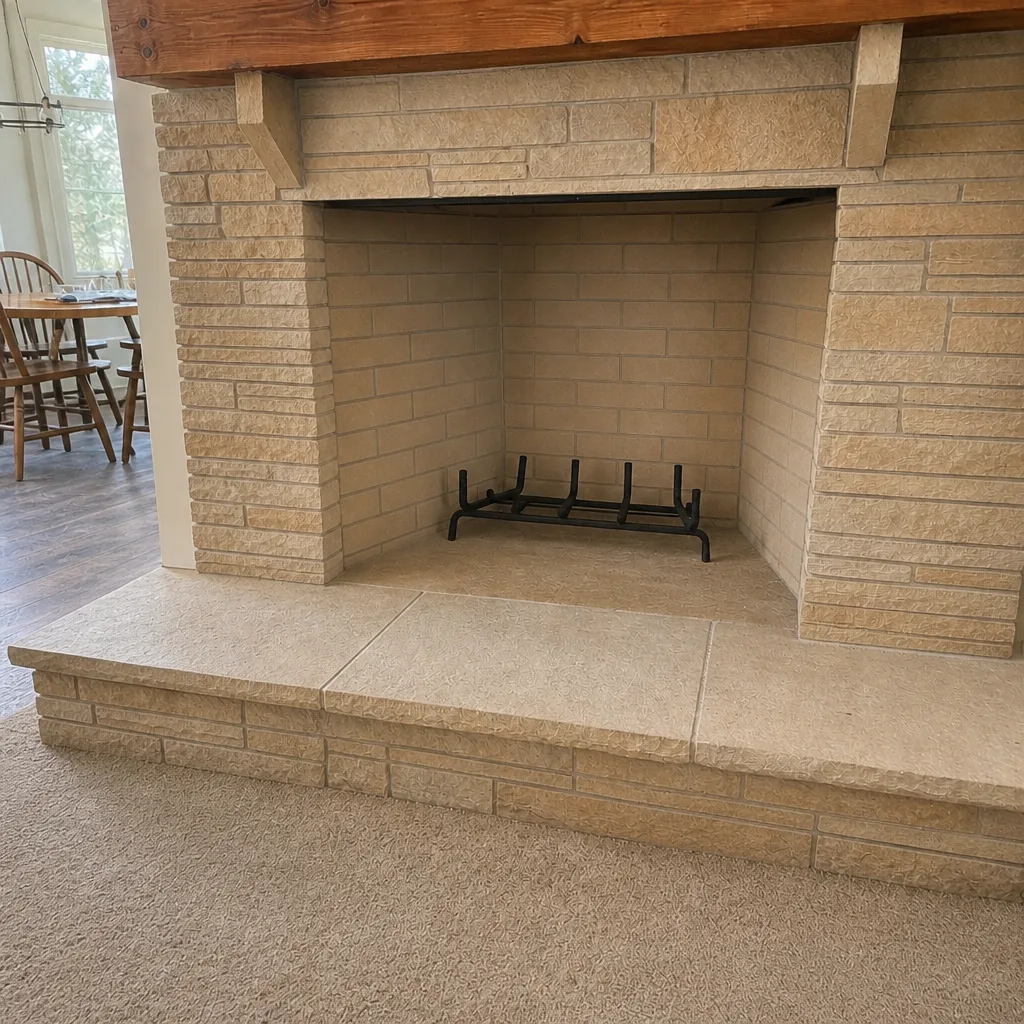
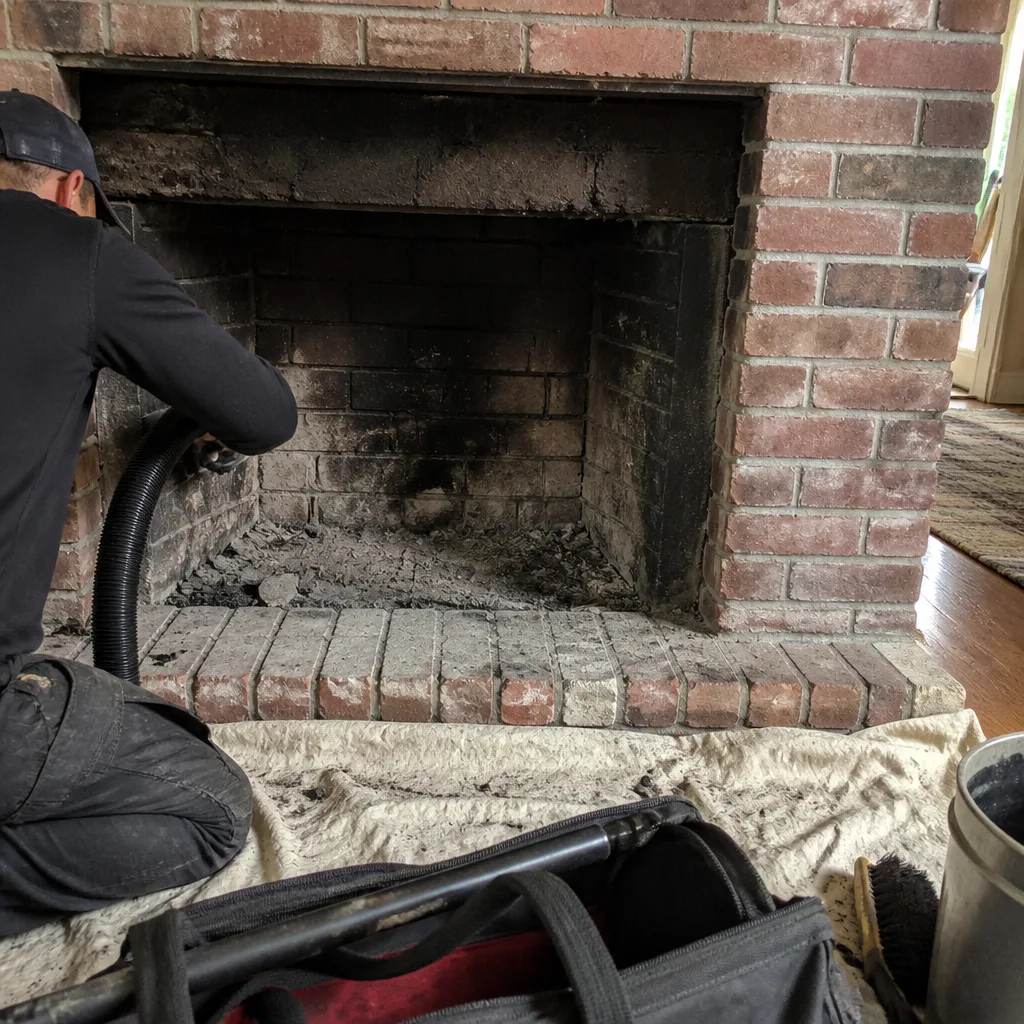
See the difference
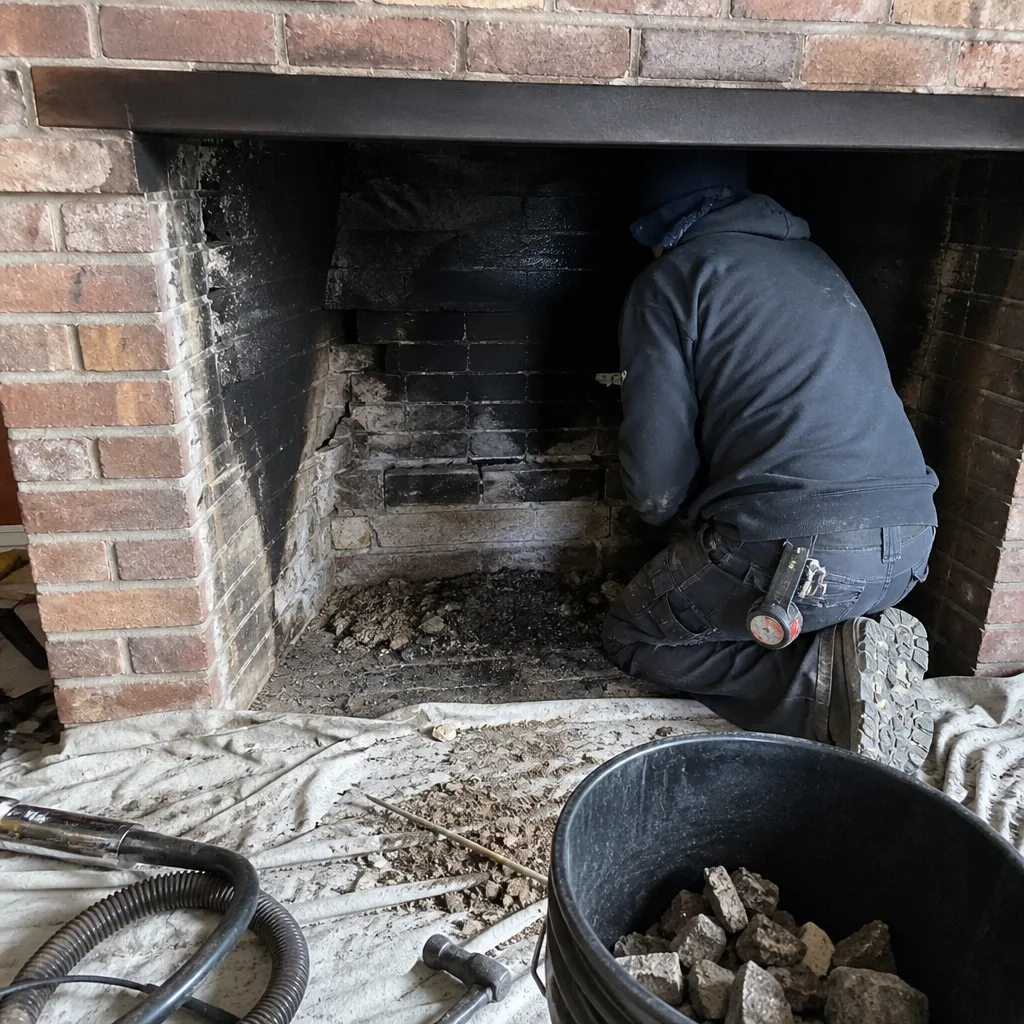 Before
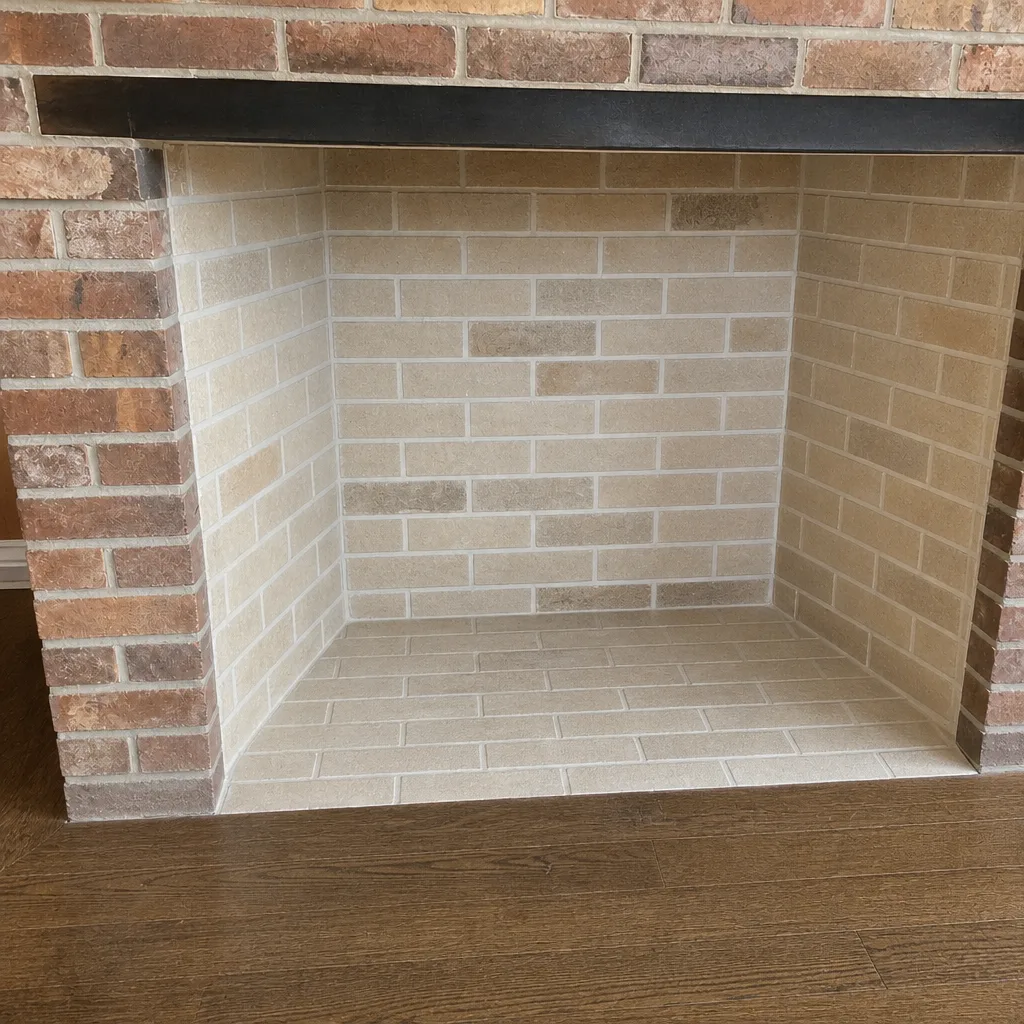 After
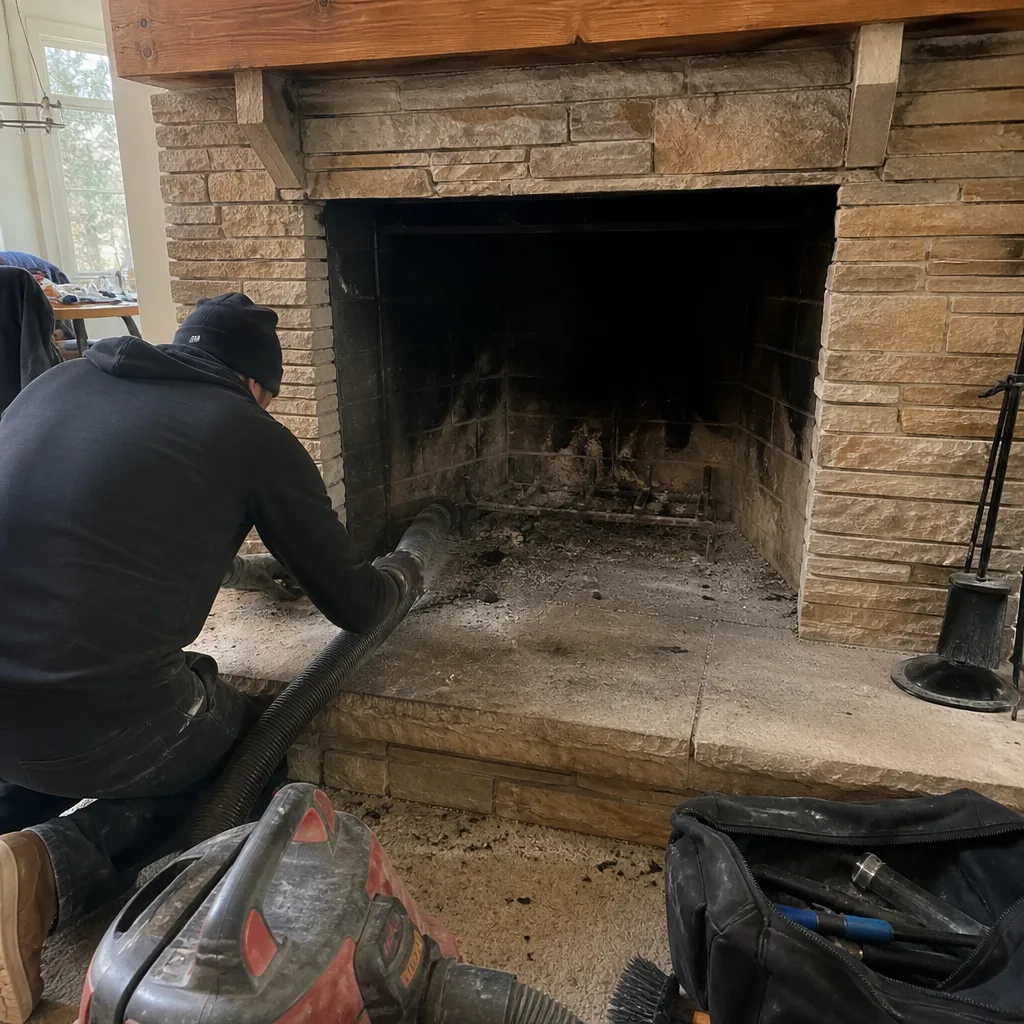 Before
 After
 Before
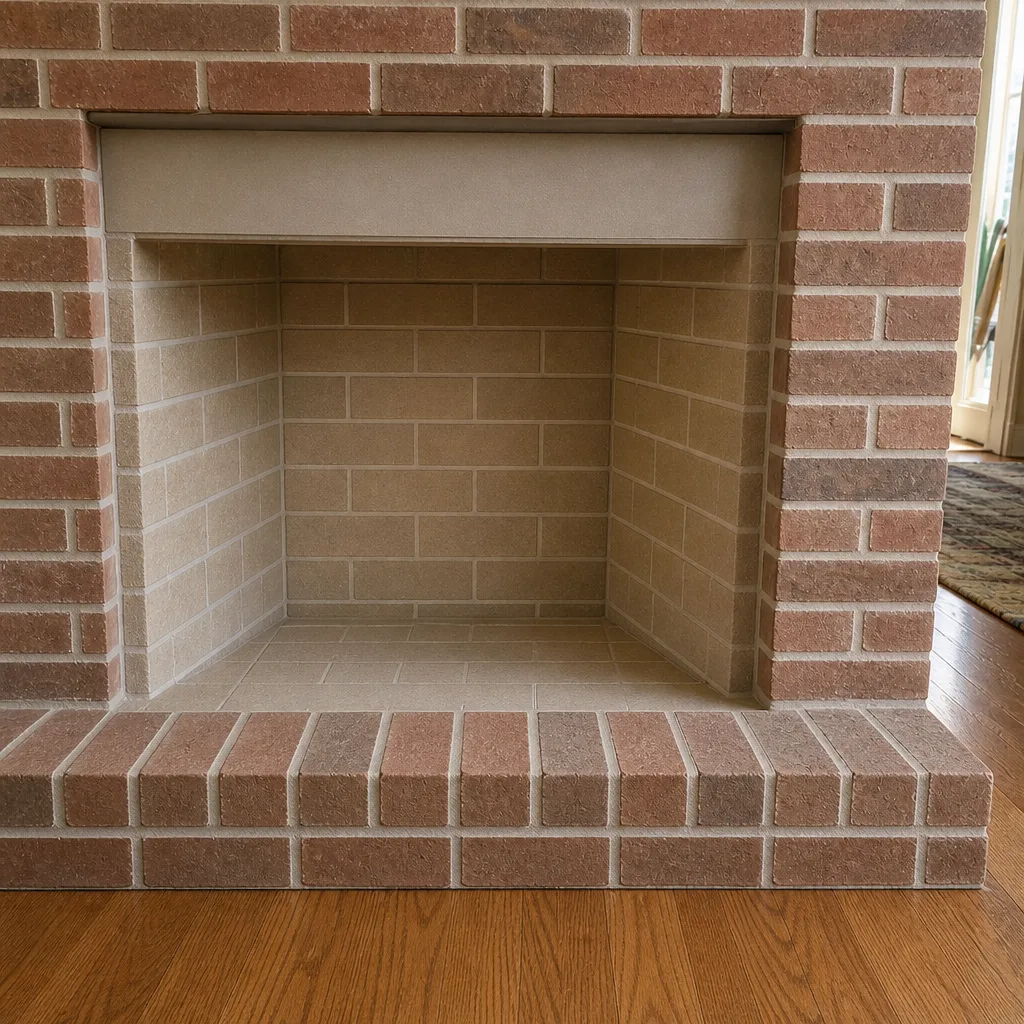 After
Common Mistakes to Avoid
- Treating efflorescence as a stain to clean. It’s moisture evidence. Painting or washing it hides the symptom and leaves the source in place, and it will come back the next time water moves through the masonry.
- Assuming a smoky fire is always a draft problem. Draft and liner problems look similar from the sofa but need different repairs. A smoky fire that persists in every weather is more likely a liner or smoke-chamber issue.
- Burning unseasoned wood to “use up” a bad batch. Wet wood produces more creosote, and Boulder’s dry climate fools people into thinking freshly cut wood is ready. It isn’t, and the moisture survives in the chimney as glaze.
- Skipping the exterior inspection because the interior “looks fine.” Spalling brick, mortar erosion, and crown cracks only show up from outside. A homeowner who never walks the exterior will miss the signs that lead to structural repair.
- Delaying a sweep because the fire “seems to draft fine.” Glazed creosote is the acute hazard and it doesn’t affect draft until it’s thick enough to obstruct. Good draft is not evidence of a clean flue.
- Using a hardware-store cap on a chimney that needs a purpose-built one. A poorly fitted cap lets water in and birds through. Gelco and Famco caps are made for the job; the improvised version usually isn’t.
- Ignoring a slow-drafting damper. A damper that sticks or won’t seat is a draft problem today and a moisture problem next season, because a partially open damper lets house air pull damp chimney smells back down.
When to Call a Professional
Some warning signs are watchable. Others aren’t. Call a professional if you see cracks in the firebox or flue tile, if smoke enters the room on every fire, if you notice interior water staining, or if a sharp creosote odor persists while the fireplace is cold. Same goes for visible efflorescence combined with spalling brick on the exterior: that combination says water has been moving through masonry long enough to compromise it, which is beyond a visual check. And call if you’ve simply never had the chimney inspected and can’t account for its history. Chimney Sweep Boulder offers free estimates in Boulder – call (855) 658-5187. We answer 24/7. Fast dispatch from 7am to 7pm, Sunday through Friday.
A sweep and inspection is not just a cleaning. It’s a chance to look at the whole system – firebox, smoke chamber, damper, flue, cap, crown – with tools that see things you can’t see from the firebox. We use professional-grade materials and the same brands chimney specialists rely on, not hardware-store substitutes. If something needs work, the camera and photos show you why before anything is recommended.
Frequently Asked Questions
Once a year is the general standard, and more often if you burn heavily through the season or notice glaze forming on the flue. Boulder’s dry, cold winters mean an active fireplace gets a lot of use in a short window, which accelerates creosote accumulation. If you burn more than a cord of wood a year, or you see shininess on the flue tile, schedule a sweep before the next season. Call (855) 658-5187 for a free estimate.
Efflorescence means water has been moving through the masonry and depositing mineral salts on the surface as it evaporates. It’s a sign of moisture intrusion from a failed crown, a crack in the masonry, or an open joint – not a cosmetic stain. If you see it, look for a source above or alongside where the stain begins. For anything beyond a small area, bring in an inspection to trace the water path.
No. A smoky fire can come from a draft problem (damper, negative pressure, house tightness) or a liner problem (obstruction, cracked tile), and the two need different work. Watch how the fire behaves from a cold start versus a warm flue, and across different weather. A fire that improves as the flue warms is more likely a draft issue. A fire that spills once it’s hot points to a liner or smoke-chamber obstruction. An inspection confirms which.
Glazed creosote ignites at lower temperatures and produces more heat when it burns, which makes it the most serious form of creosote buildup. Ordinary soot is a normal byproduct of burning and cleans up with a standard sweep. Glaze is harder to remove and needs a different approach. If you see shininess on the flue tile rather than a dry black deposit, that’s the sign to act on.
HeatShield can restore a deteriorated flue liner in some cases, and a full reline with DuraFlex is the right call in others. The only way to know is to look. That’s why inspection comes first. HeatShield is a less invasive option and it’s a real one for certain liner conditions. We’ll tell you honestly which your chimney actually needs. Call (855) 658-5187 for a free estimate.
Skipping a sweep leaves creosote in the flue, and glazed creosote is fuel. Over time, it increases the chance of a chimney fire and can allow the liner to crack from heat cycling. A cracked liner is no longer a safe path for exhaust, which can let carbon monoxide enter the living space. The cost of a sweep is small next to the cost of a liner replacement or structural repair. Book a sweep before the burning season starts.
A smoky smell in summer usually means one of two things: a damper left open, or a gap between the damper and the liner allowing house air to pull chimney smells back down. Both are fixable, and neither calls for emergency work – but both are worth looking at before the burning season starts. If the smell is sharp and acrid rather than smoky, treat that as creosote evidence and schedule an inspection sooner.
A small crack in a firebrick is a stop-using sign until it’s inspected. A hairline in the mortar joint is often just age. A crack that goes through the firebrick or into the brick shell beyond it allows heat and gases to reach the surrounding structure, which is a fire risk. If you can’t tell the difference, treat it as a stop-using sign and get an inspection. Call (855) 658-5187 for a free estimate.
The Bottom Line
Warning signs sort into three tiers – monitor, schedule soon, stop using – and knowing which tier a symptom belongs to is what turns the list into a decision. Glaze cracking, efflorescence, spalling brick, persistent sharp odor, and interior cracks are the signs worth acting on. The exterior signs matter in Boulder specifically because the freeze-thaw cycle turns a small moisture problem into a structural one faster than most homeowners expect. And the smell test is the most useful diagnostic tool you have at home if you know what each odor means.
A clean chimney is a safe chimney, and the sign comes before the damage. When a sign crosses the line, treat it as evidence and act on it. That’s a better approach than hoping it clears up, and it’s what a proper inspection is for. One company, every part of the system, from the firebox to the cap – no handoffs, no gaps in accountability. From the firebox to the cap, we service the whole chimney, not just the part you can see.
A clean chimney is a safe chimney, and every sweep we book starts with the system as it actually is, not a checklist. If you’ve noticed any of the signs in this guide, or you haven’t had the chimney looked at in a few seasons, get it on the schedule before burning season. Our technicians have up to 14 years of experience and use professional-grade materials from Chimney Sweep Boulder, including Olympia Chimney products and DuraFlex liner systems. If a fireplace repair issue is behind your draft problem, that’s part of what we cover too. fireplace repair and cap and crown work are handled by the same team, so nothing gets handed off to a general contractor mid-job.
Call (855) 658-5187 for a free estimate. We answer 24/7. Fast dispatch from 7am to 7pm, Sunday through Friday. A camera inspection and a photo report are included with every sweep, and the price is set per job by the written estimate.
Written by the team at Chimney Sweep Boulder.