
Last updated November 23, 2026
 Sweep & inspection
 Caps & crowns
 Flue relining
 Masonry repair
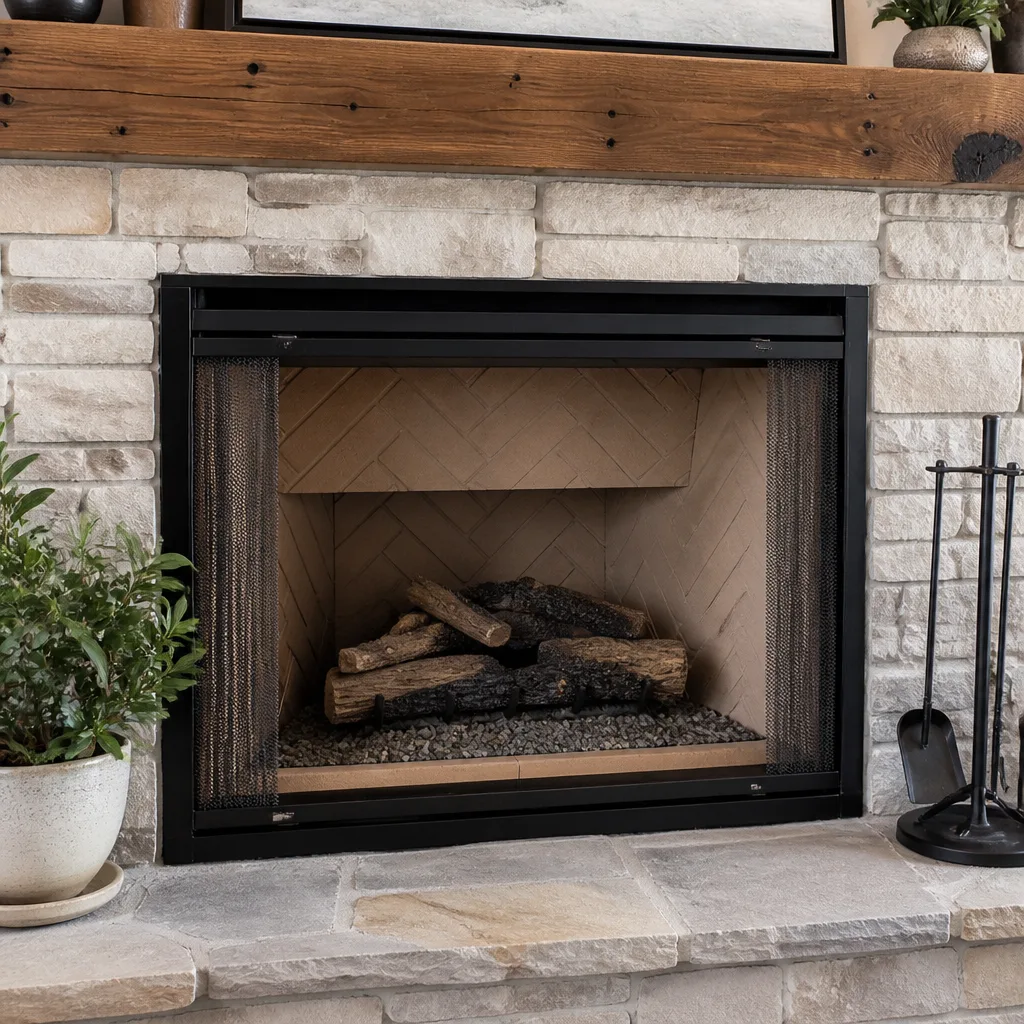 Gas fireplace service
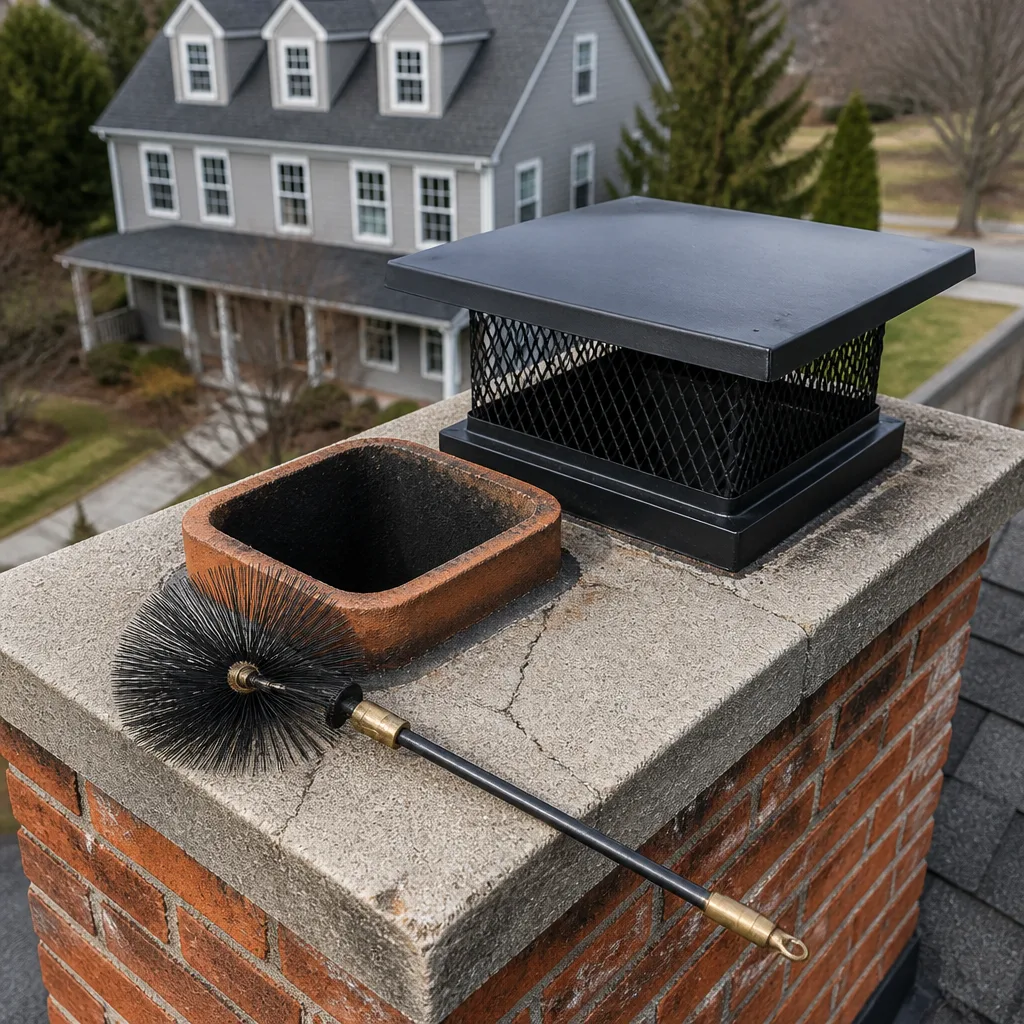
Level 1 sweep and inspection to the NFPA 211 annual standard - flue, crown, cap, and flashing checked and photographed
Chimney sweep logs do not sweep chimneys. They loosen some creosote - which then falls where a brush and vacuum still have to collect it.
Chimney Sweep Maintenance Checklist for Boulder Homeowners
The damper and the smoke chamber drive more chimney service calls than the flue does, yet they show up on almost no homeowner maintenance checklist. Most seasonal reminders tell you to book a sweep and stop there, which leaves the parts that actually fail, and the parts you can see with your own eyes, completely unexamined. A checklist is only useful if it tells you what to look at and what a problem looks like. That’s what this guide does: a component-by-component framework covering the crown, cap, flashing, liner, smoke chamber, damper, and firebox, with pass/fail indicators for each, plus what you can safely check yourself in Boulder and what needs a camera.
Quick Answer
A chimney maintenance checklist for Boulder homeowners should cover seven components: crown, cap, flashing, flue liner, smoke chamber, damper, and firebox. Each one has a specific pass/fail indicator you can observe from the ground, the roof line, or the firebox, and anything you can’t verify from those vantage points requires a professional camera inspection inside the flue. The checklist matters most in Boulder because freeze-thaw cycles and Front Range wind events stress the crown and cap harder than most climates do.
Styles & brands we work with
- Sweep & inspection
- Caps & crowns
- Flue relining
- Masonry repair
- Gas fireplace service
Table of Contents
- Why a Component Checklist Beats a Seasonal Reminder
- Exterior Checks: Crown, Cap, and Flashing
- Boulder’s Freeze-Thaw Cycle and What It Does to Your Crown
- High-Wind Events Along the Front Range: Inspecting the Cap
- The Flue Liner: What You Can See and What Needs a Camera
- Smoke Chamber and Damper: The Most Overlooked Components
- The Firebox and Draft Test Before Your First Burn
- How to Log Observations Year-Over-Year
Why a Component Checklist Beats a Seasonal Reminder
A seasonal reminder tells you when. A component checklist tells you what. That difference matters because a chimney is not one system that fails all at once; it’s seven components that wear at different rates, for different reasons, under different stresses. The crown cracks from freeze-thaw. The cap takes the wind. The liner degrades from heat and creosote. The damper sticks from disuse. If all you track is “did I get it swept this year,” you can pass a seasonal check while a cracked crown quietly lets water into the masonry above the smoke chamber.
In our experience, the calls that surprise homeowners most are the ones where the firebox and flue look fine but the crown has been failing for two winters. Water finds the path of least resistance, and on a masonry chimney that path usually runs down through the smoke chamber and into the firebox surround, where it shows up as efflorescence, crumbling mortar, or a damper that won’t seat.
Here’s the framework we use, and the one this guide walks through component by component:
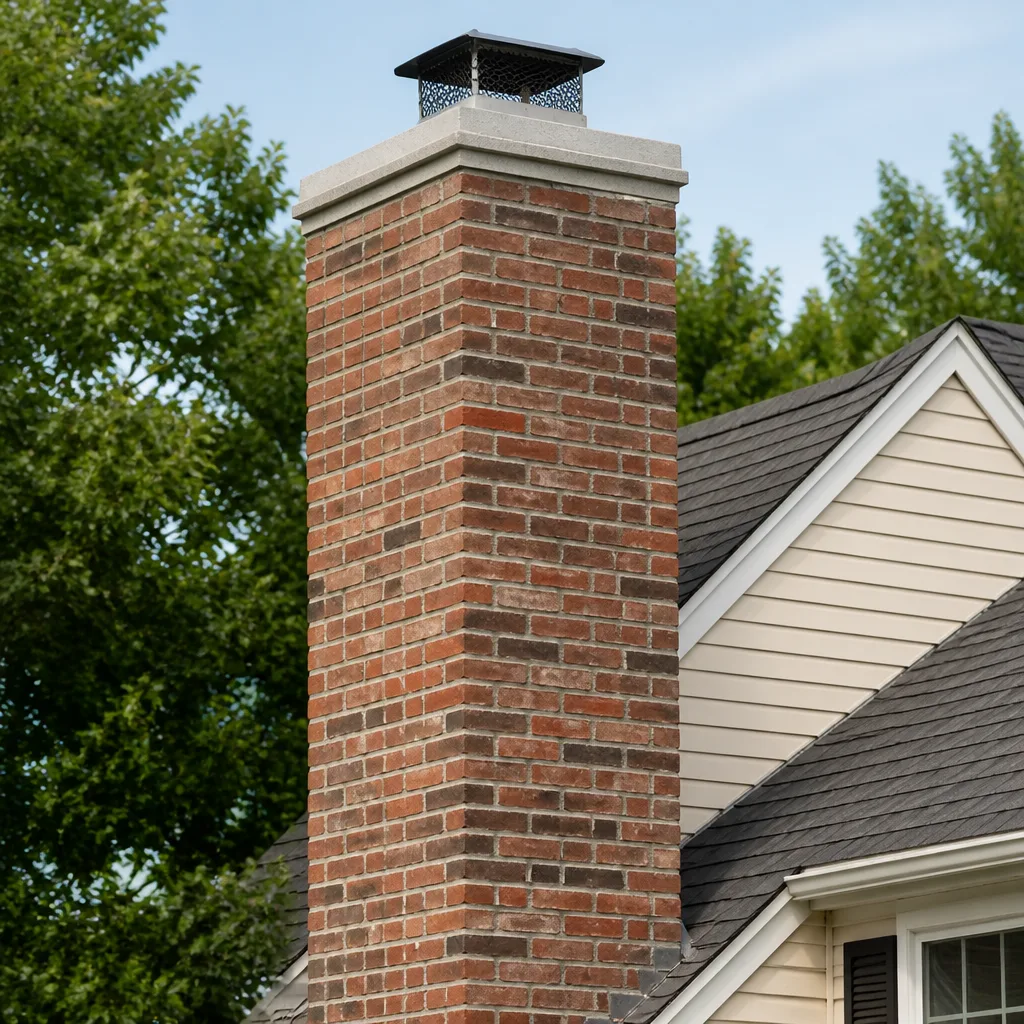
- Crown – the concrete or mortar cap at the very top that sheds water away from the masonry.
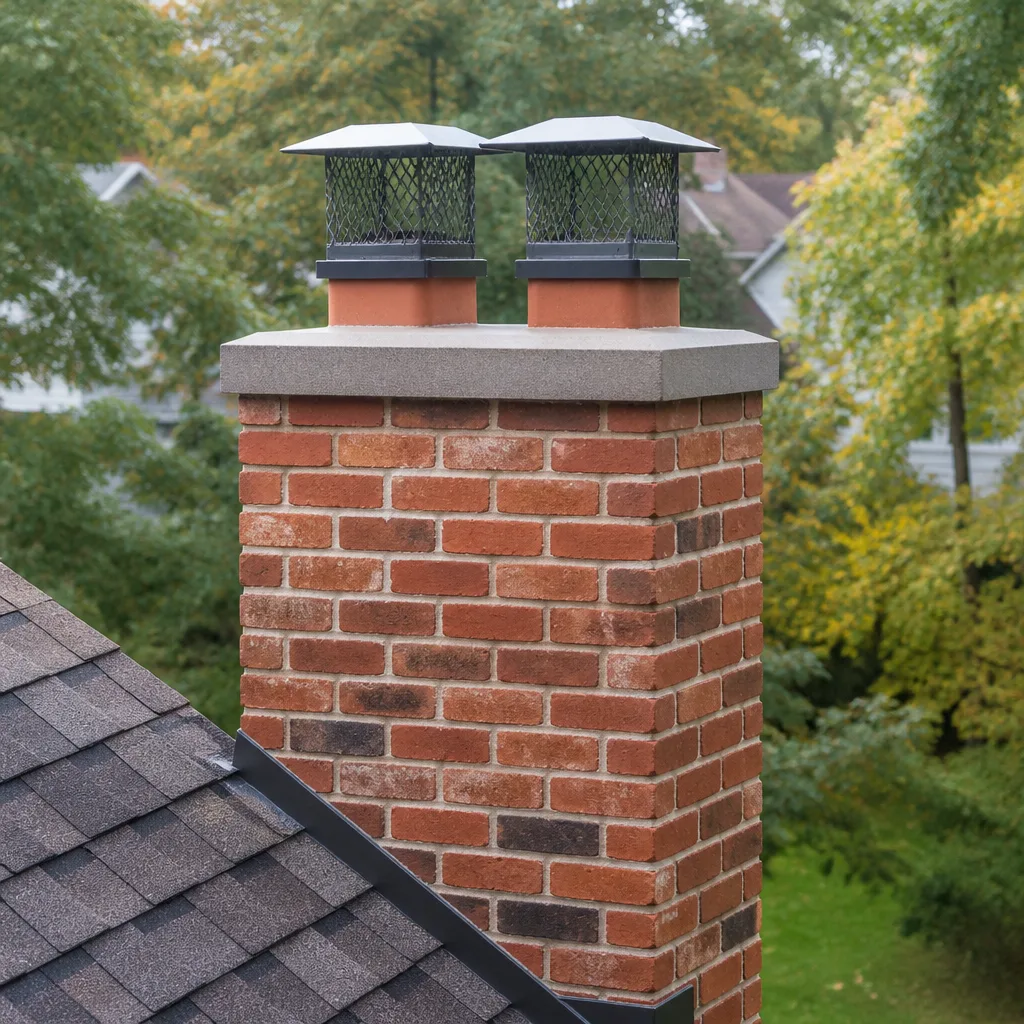
- Cap – the metal or mesh cover that keeps rain, animals, and debris out of the flue.
- Flashing – the metal seals where the chimney meets the roof.
- Flue liner – the clay tile or stainless steel channel that carries smoke and gases up and out.
- Smoke chamber – the sloping shelf above the damper that funnels smoke into the flue.
- Damper – the metal plate that opens and closes the flue at the firebox.
- Firebox – the firebrick chamber where the fire actually burns.
Each component gets a pass/fail indicator below, and each indicator is something you can either observe yourself or have verified with a camera. That split is the whole point. If you want a full sweep and inspection done with professional-grade materials and a camera report, that’s what a chimney sweep in Boulder covers. The checklist is what you check in between.
Exterior Checks: Crown, Cap, and Flashing
Three components on the outside of the chimney do most of the weather defense, and all three are visible, in most cases, from the ground with binoculars or from a safe vantage on the roof line. You don’t need to climb anything to spot the pass/fail indicators below, and we’d rather you didn’t. Observe from a distance and let a trained technician get up close.
Crown
- Pass: The crown is a continuous surface that slopes away from the flue opening, with no visible cracks wider than a hairline and no pieces missing at the edges.
- Fail: Cracks you can see from the ground, a crown that’s flat or sloping toward the flue instead of away, spalling concrete, or a crown that’s separated from the masonry below. Any of these lets water in.
Cap
- Pass: A cap is present, securely attached, with its mesh or louvers intact and no dents or gaps that would let animals or rain in.
- Fail: Missing cap, a cap that’s visibly tilted or lifted on one side, torn mesh, or a cap that’s rusted through. A missing cap is the single most common reason birds and squirrels end up in a flue.
Flashing
- Pass: The metal flashing at the roof line is tight against both the chimney and the roofing, with no lifted edges, no gaps, and no visible sealant that’s cracked or peeling.
- Fail: Lifted flashing, gaps where the roof meets the chimney, rusted-through metal, or a bead of caulk doing the job flashing should be doing.
If any of these fail, the fix is a chimney repair job, not a sweep, and it’s the kind of repair where using a purpose-built component matters. We install Gelco and Famco caps and crowns because they’re made for the job, not improvised from hardware-store parts. When you’re ready to have the exterior looked at properly, call (855) 658-5187 for a free estimate.
Boulder’s Freeze-Thaw Cycle and What It Does to Your Crown
Boulder sits at the base of the Flatirons, and that position brings a specific pattern of freeze-thaw cycles that hits the crown harder than the flue. The mechanism is simple: water gets into a hairline crack in the crown, freezes overnight, expands, and widens the crack. The next warm afternoon it thaws, water runs deeper, and the following night it freezes again. Each cycle does a little more damage, and Boulder gets a lot of cycles between the first hard freeze and the last thaw of spring.
What this means for your checklist is that the crown deserves a look after the first freeze of the season and again in early spring, when the damage from winter shows up most clearly. If you see new cracks in March that weren’t there in October, the freeze-thaw cycle is the reason, and it’s telling you the crown needs attention before another winter widens them further.
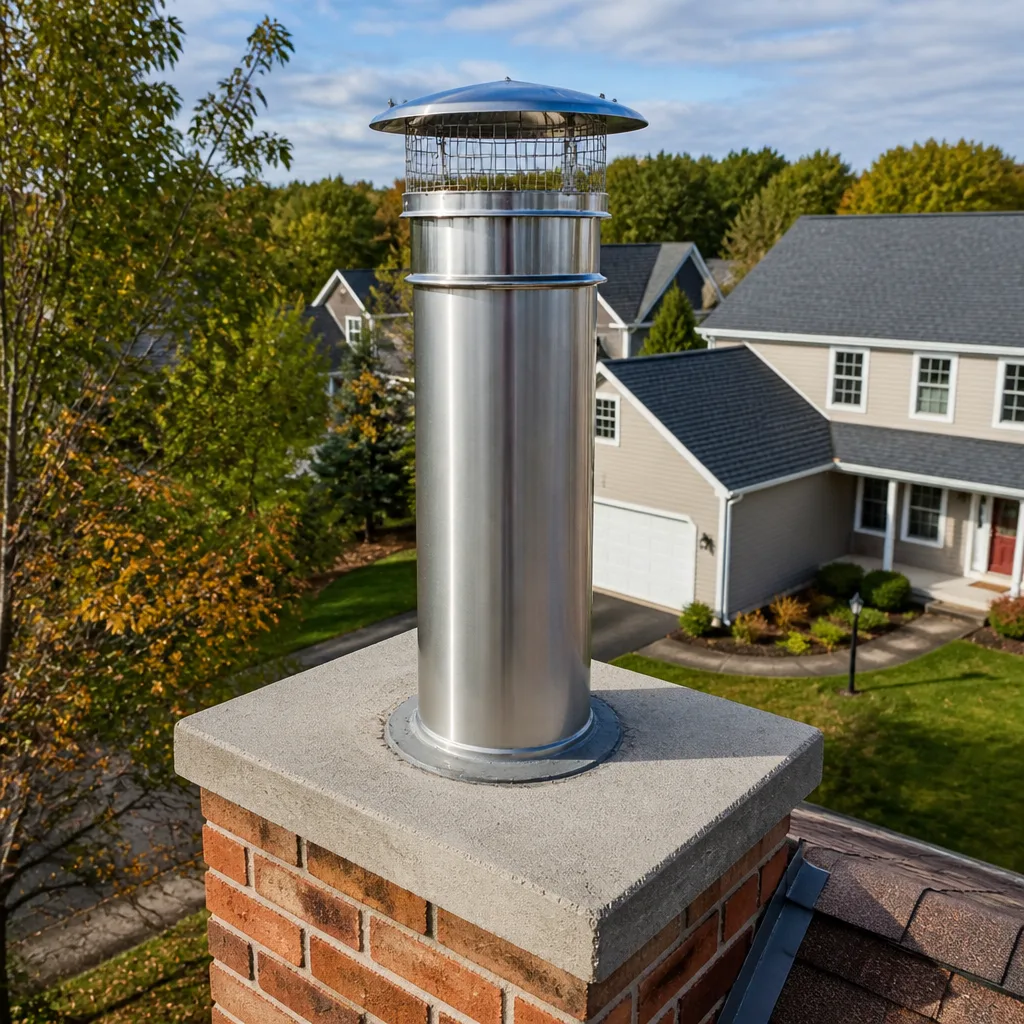
This is also where a clay tile liner shows its weakness. Clay tile is brittle, and the same freeze-thaw stress that cracks the crown can crack a tile in the flue. Once a tile cracks, the flue gases can reach the masonry around it, and the liner is no longer doing its job. If a camera inspection shows a cracked or spalled liner, a chimney repair plan is the next step, and there are two honest options: HeatShield ceramic resurfacing, which restores a deteriorated liner without a full reline, or a DuraFlex stainless-steel liner system for a liner that’s beyond resurfacing. We’re certified to install DuraFlex and authorized to use HeatShield, and we’ll tell you which your chimney actually needs rather than defaulting to the bigger job.
The takeaway for Boulder homeowners: treat the crown as the freeze-thaw canary. When it starts cracking, the liner may not be far behind. A look at the crown in spring is a look at the whole winter’s damage.
High-Wind Events Along the Front Range: Inspecting the Cap
The Front Range gets wind events that a cap is not always built for, and the cap is the component most likely to fail without you noticing. A cap that was secure in fall can be tilted, dented, or partly detached after a strong spring wind, and the failure doesn’t always announce itself. What you’ll notice instead is a draft that’s suddenly worse, a downdraft that pushes smoke into the room, or animals finding their way into the flue.
Here’s a quick post-wind check, done from the ground:
- Look at the silhouette. The cap should sit level and centered over the flue. A tilt on one side means a mounting point has failed.
- Check the mesh. Torn or missing mesh lets birds and squirrels in and is the cause of most animal-in-flue calls.
- Look for dents and rust. A cap dented by a wind-blown branch or rusted through at the seams isn’t keeping water out the way it should.
- Note the draft. A sudden change in draft after a wind event is a signal to get the cap inspected, not to keep burning and work around it.
When the cap needs replacing or a crown needs rebuilding, we install Gelco and Famco caps with purpose-built hardware, and we use Olympia Chimney and Copperfield components where they’re the right fit. These are professional supply brands, not the caps you’ll find at a big-box store, and the difference shows up in how long they last through a Front Range wind season. One company handles the cap, the crown, and the inspection in a single visit, so there’s no handoff between a roofer and a sweep.
The Flue Liner: What You Can See and What Needs a Camera
The flue liner is the one component on this checklist where the honest answer to “can I check this myself?” is mostly no. The liner sits inside the flue, above the smoke chamber and out of sight from the firebox. You can see the very bottom of the flue from the firebox opening, and you can see the flue opening at the top from the ground, but the middle, where cracks and creosote buildup actually concentrate, needs a camera.
What you can safely observe yourself:
- At the firebox: shine a light up the flue opening and look for visible cracks in the tile, heavy creosote glaze on the first few feet, or a flue that’s visibly out of alignment.
- At the top: from the ground, check that the flue opening is centered and unobstructed, and that no tile is visibly spalled or missing.
What needs a professional camera inspection:
- Cracks and gaps in the tile anywhere above the first few feet.
- Creosote thickness and whether it’s the glazed, flammable kind that needs professional removal.
- Offset or shifting tiles that indicate movement in the masonry.
- Liner condition before and after any resurfacing or relining work.
A camera inspection and photo report comes with a proper sweep, and it’s the only way to know the honest condition of the liner. If the camera shows a deteriorated liner, HeatShield resurfacing can restore it without a full reline, which is a less invasive and more cost-conscious option than a full DuraFlex install for a liner that hasn’t failed structurally. If the liner is beyond resurfacing, a DuraFlex stainless-steel liner is the code-compliant path. Either way, you see the camera evidence yourself before anything is recommended, so the decision is yours to make on facts, not on a technician’s word.
Smoke Chamber and Damper: The Most Overlooked Components
If the flue is where a checklist usually starts and ends, the smoke chamber and damper sit just above the firebox and get almost no attention at all. That’s a problem, because they’re the source of a large share of the service calls we see. The smoke chamber is the sloping shelf between the damper and the flue. Its job is to funnel smoke upward smoothly, and when it’s rough, cracked, or coated in creosote, smoke doesn’t want to leave. The damper is the plate that opens and closes the flue, and a damper that doesn’t seat or doesn’t open fully is the difference between a fire that drafts and one that smokes the room.
Smoke Chamber
- Pass: Smooth, sloped surfaces with no heavy creosote buildup and no cracked or missing parging.
- Fail: Rough or pitted surfaces that catch creosote, visible cracks, or a chamber that’s too shallow or square to funnel smoke cleanly.
Damper
- Pass: Opens fully and closes firmly, with a metal plate that seats flat when closed and no rust-through or warping.
- Fail: Sticks halfway, doesn’t fully close (letting heated room air escape up the flue year-round), doesn’t fully open, or has rust holes in the plate.
A smoke chamber with rough parging is one of the reasons a fire smokes even after a sweep. A damper that won’t seal is one of the reasons a room feels cold near the fireplace even when no fire is burning. If either turns up a problem, our fireplace repair work covers resurfacing the smoke chamber and getting the damper functioning correctly, so the fire has a clear path from the firebox to the cap. If the damper or smoke chamber is showing cracks, that’s a call worth making: (855) 658-5187.
The Firebox and Draft Test Before Your First Burn
Before you light the first fire of the season, a draft test tells you whether the chimney is going to pull smoke up and out or push it back into the room. It’s a simple check you can do from the firebox with no special tools beyond a smoke source and a mirror, and it’s the best five minutes of the season for catching a draft problem before it becomes a smoky evening.
Here’s how a basic draft test goes:
- Open the damper fully and confirm it’s actually open by looking up the flue with a light, or by feel if you have a throat damper.
- Check the firebox for obstacles and clear out any ash and leftover debris from last season.
- Warm the flue by holding a lit rolled newspaper or a smoke source near the open damper for a minute or two. A cold flue can reverse draft until it warms.
- Hold the smoke source just inside the firebox and watch which way the smoke goes. If it rises up the flue cleanly, you have draft. If it hangs or drifts into the room, that’s a draft problem to investigate.
- Check the damper seal by closing it and looking for light gaps around the edges. A closed damper that lets light through won’t keep heated air from escaping.
A failing draft test isn’t a reason to light a fire and hope. It’s a reason to have the smoke chamber, damper, and flue looked at by a professional. The firebox itself is worth a look too: cracked firebrick, crumbling mortar joints, or a firebox that’s pulling away from the surround are all fail indicators that a fireplace repair can address. When we look at a fireplace, we look from the firebox up, so the fix addresses the cause of the draft rather than one symptom.
How to Log Observations Year-Over-Year
The most useful thing you can do with this checklist is keep a simple log of what you observe each season. A single year’s observation tells you the current state of a component. A log of three or four years tells you the trend, and the trend is what lets a professional sweep spot a crown that’s cracking a little more each winter, a cap that’s drifting out of level, or a liner that’s degrading faster than it should.
Here’s a simple log format that works:
- Date of each observation, split into spring and fall.
- Component checked: crown, cap, flashing, liner (visible portion), smoke chamber, damper, firebox.
- Pass/fail indicator for each, with a note on anything marginal.
- Photo or sketch of any change you noticed, especially a new crack or a cap that looks different from last year.
- Professional notes from any sweep, inspection, or repair, kept with your log.
When you hand a log like this to a technician before a sweep, the inspection becomes a comparison against your own baseline rather than a one-time snapshot. That’s how a professional spots a trend, and it’s how we avoid recommending work on a component that’s merely aging normally versus one that’s actively failing. We keep the camera report from a sweep with the job so you can compare this year’s evidence to next year’s. That’s the difference between a checklist that gets filled in and a checklist that actually protects the chimney.
Common Mistakes to Avoid
- Skipping the crown because the flue looks fine. A clean flue says nothing about the crown, and the crown is what sheds water off the whole chimney. In Boulder, the freeze-thaw cycle can crack a crown that passed a visual check last fall.
- Burning before a draft test. A draft test takes minutes and catches a reversed or weak draft before the room fills with smoke. Skipping it is how a small draft problem turns into a smoky first fire of the season.
- Climbing onto the roof to inspect the cap yourself. The pass/fail indicators for a cap are visible from the ground with binoculars or from a safe vantage. The roof is not the place to inspect a chimney, especially in Front Range wind.
- Assuming a clean flue means a clean smoke chamber. The smoke chamber sits above the damper and coats with creosote just as the flue does, and it’s the source of a large share of smoky-fire complaints. If your sweep doesn’t mention it, ask.
- Replacing a cap with the cheapest hardware-store unit after a wind event. A cap that fails in the next wind event isn’t saving you anything. Purpose-built caps from Gelco, Famco, Olympia Chimney, or Copperfield are made for the load a Front Range wind puts on a chimney.
- Replacing a liner by default when resurfacing would do. HeatShield ceramic resurfacing can restore a deteriorated liner without a full reline. Ask for camera evidence either way, and expect an honest answer about which your chimney needs.
- Not keeping a log. Without a year-over-year record, every inspection starts from zero, and a slow trend in the crown, cap, or liner goes unnoticed until it’s a bigger repair. A log turns a snapshot into a trend line.
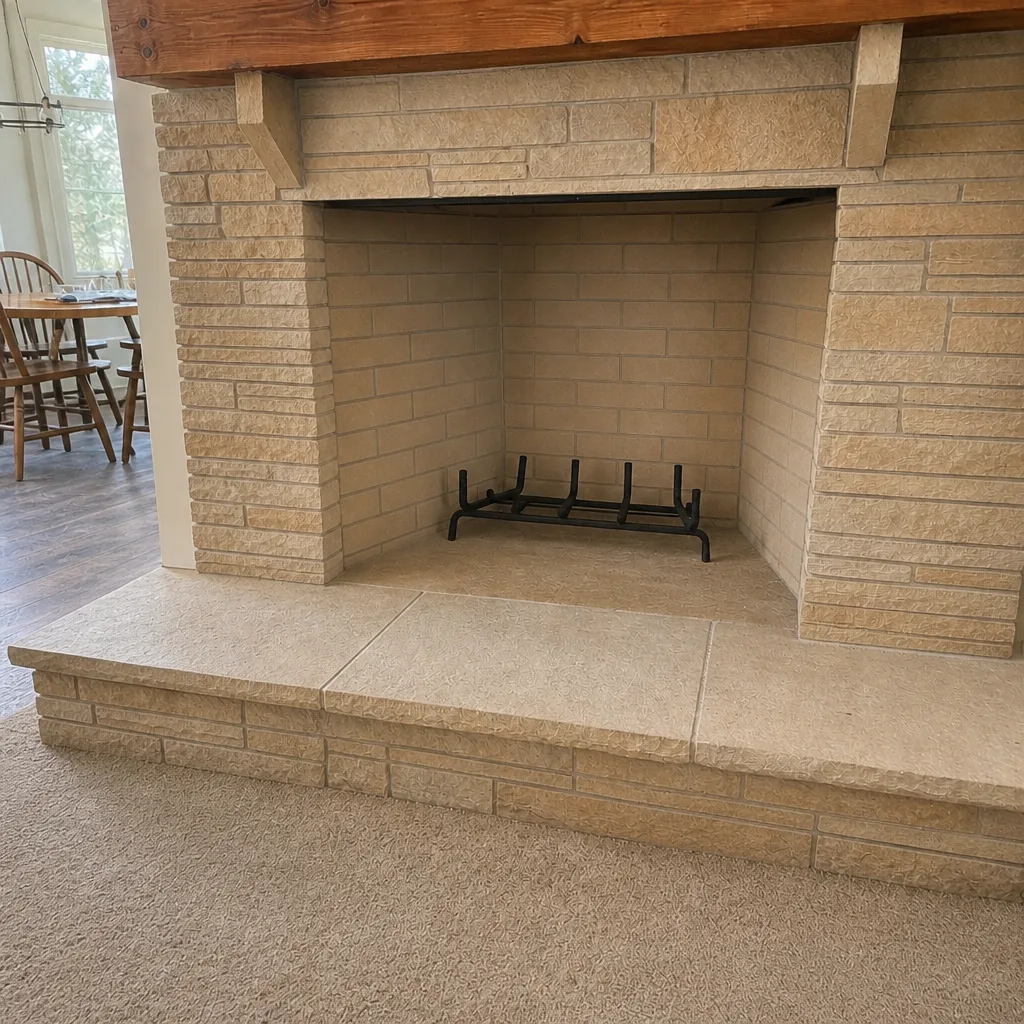
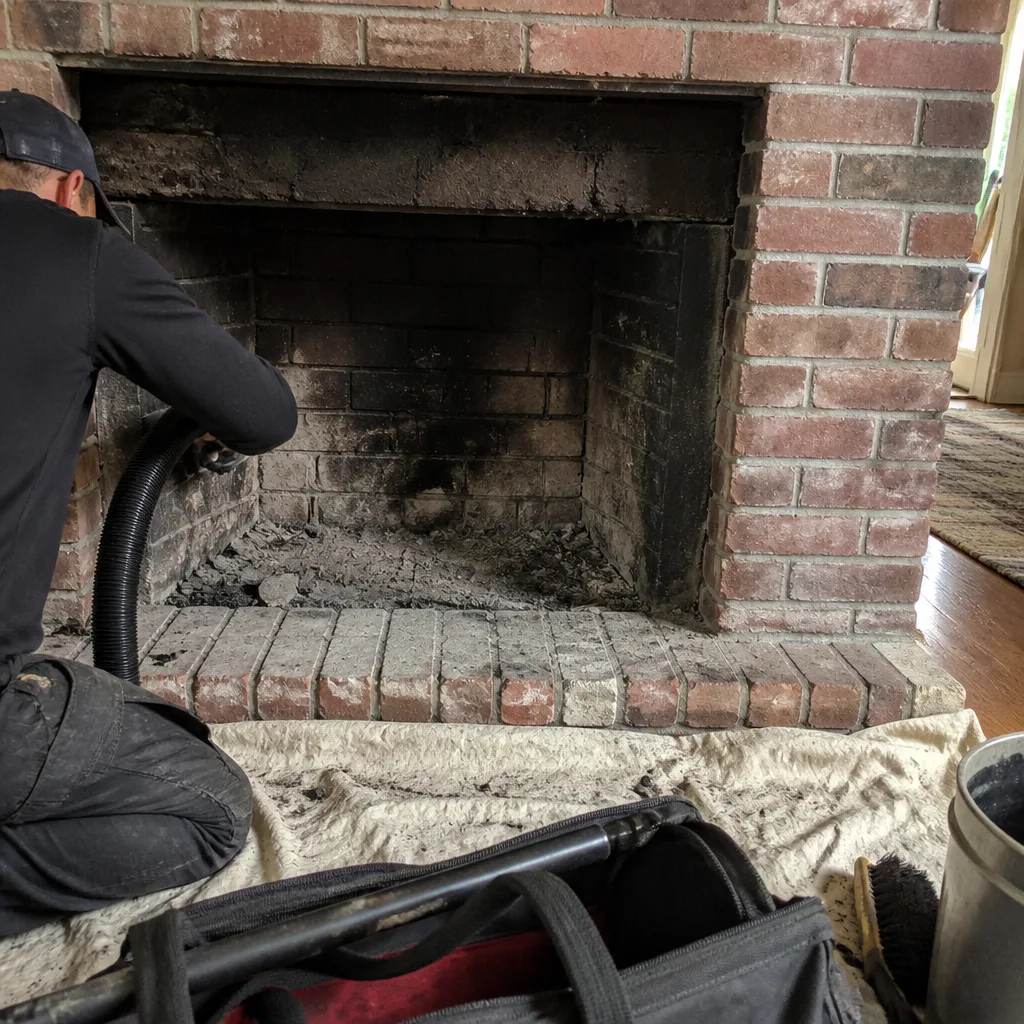
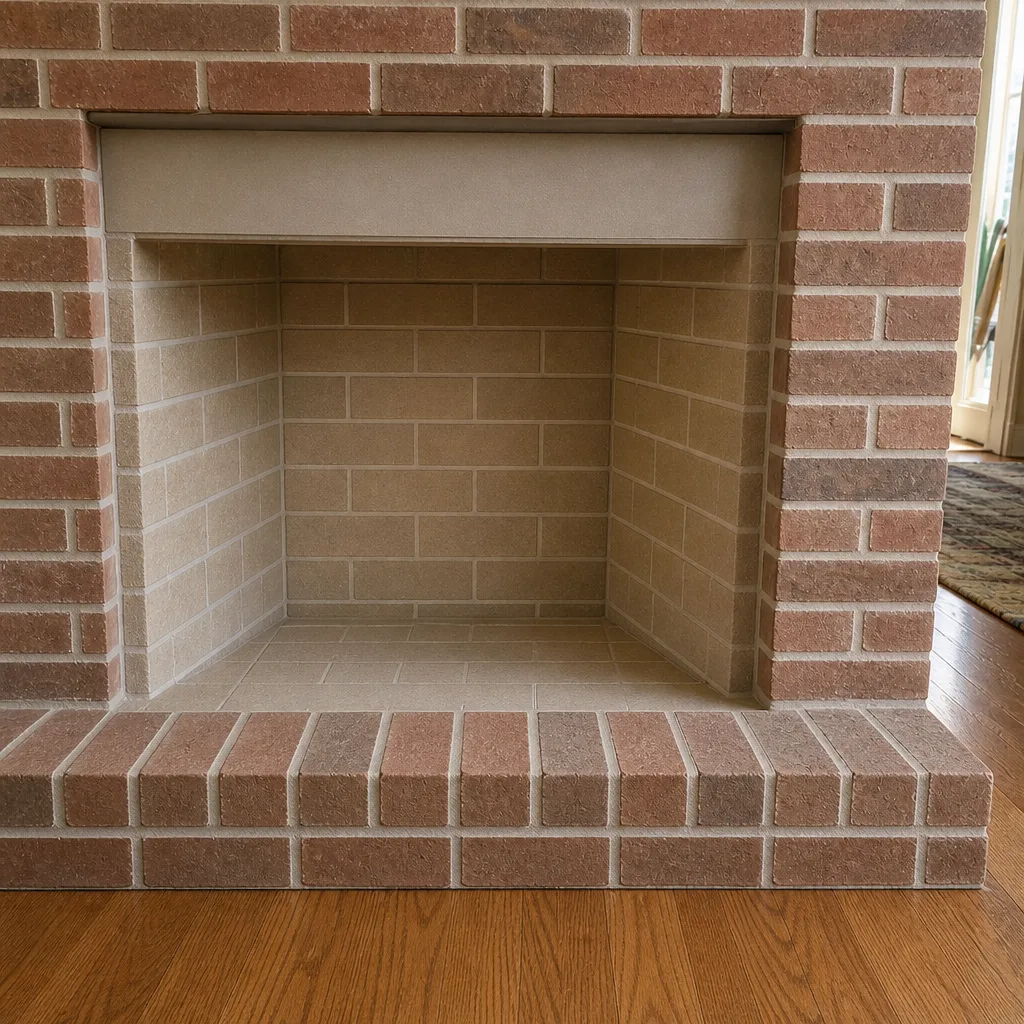
See the difference
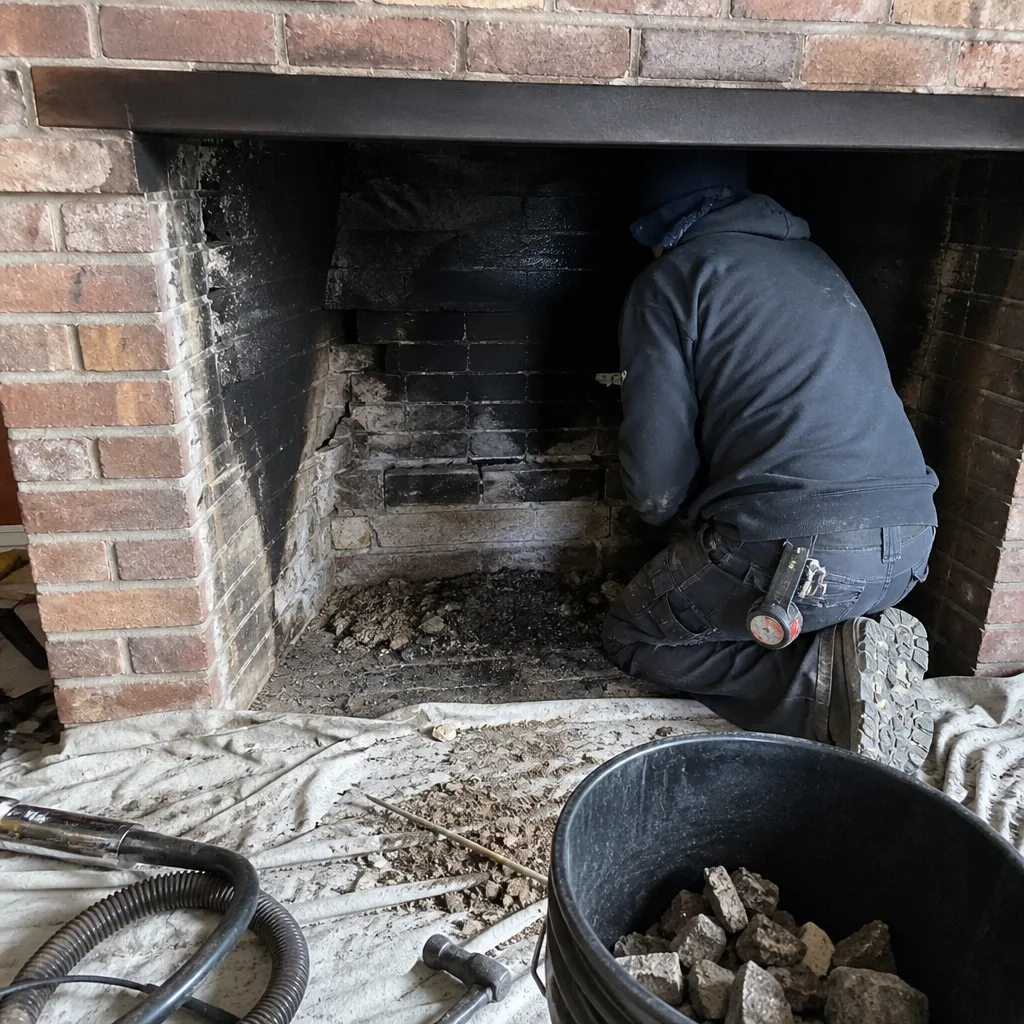 Before
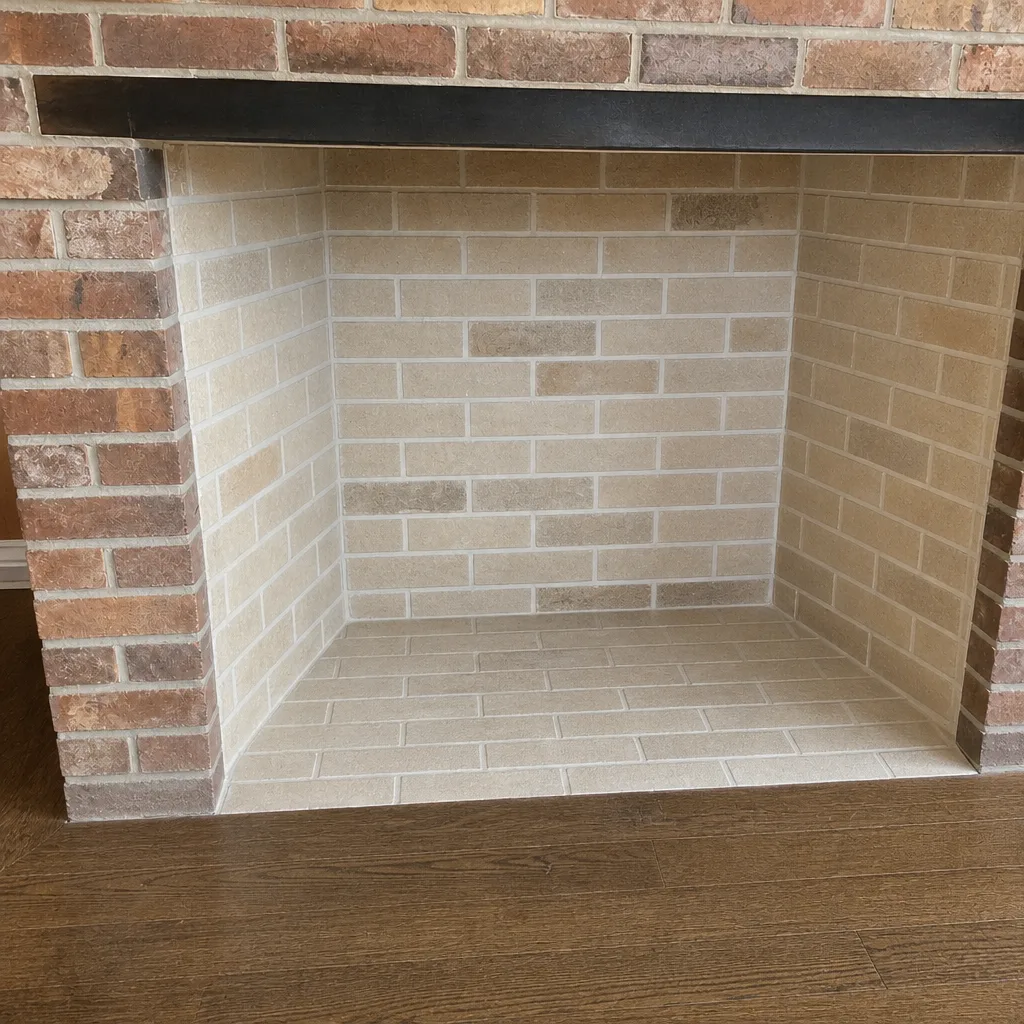 After
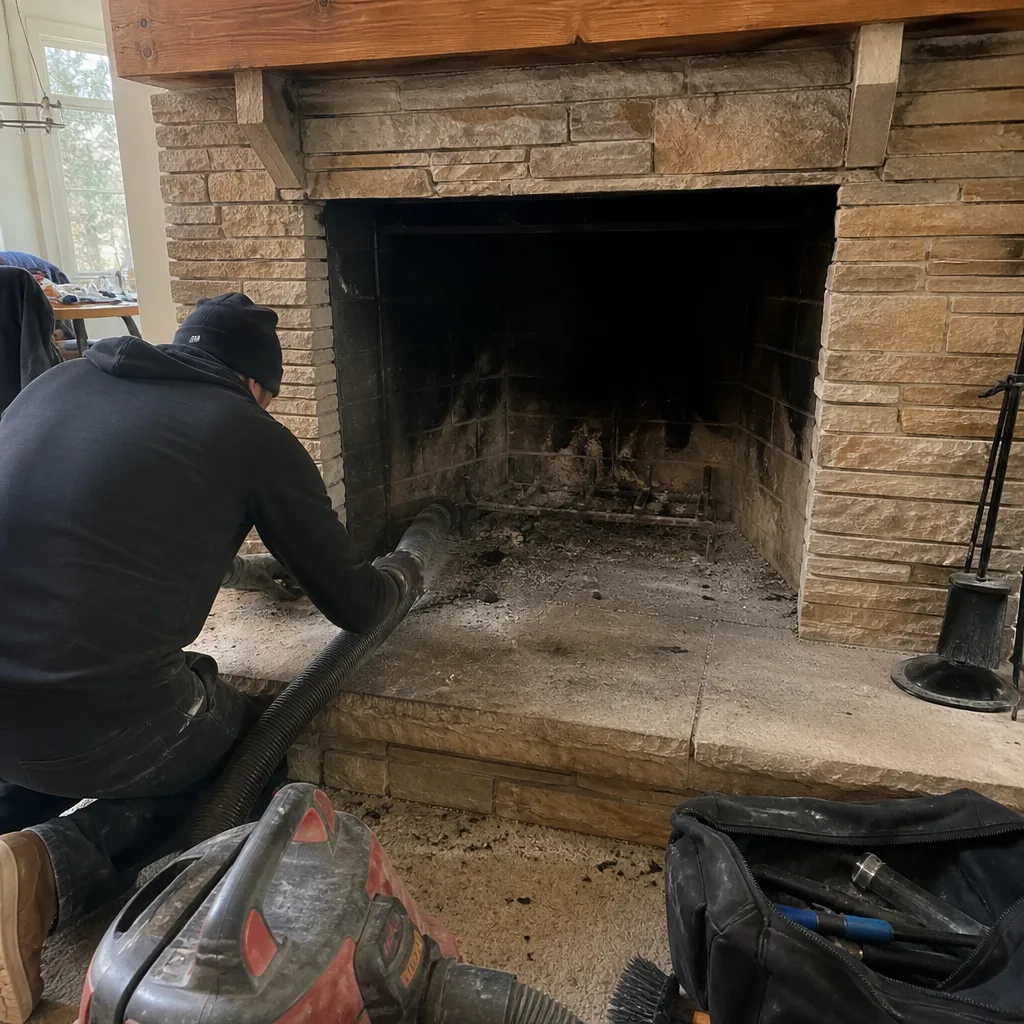 Before
 After
 Before
 After
When to Call a Professional
Some checklist items are safe for you to observe from the ground or the firebox, and some are not. Call a professional when any of these come up: a crown with visible cracks or spalling, a cap that’s tilted, detached, or missing, flashing that’s lifted or rusted, a smoke chamber or damper with visible cracks, a firebox with cracked firebrick or crumbling joints, a draft test that fails, or any sign of creosote glaze in the flue. Call before the first fire of the season if it’s been more than a year since your last sweep, and call right away if you smell smoke in a room with no fire burning. High-tension components, masonry repair at height, and anything inside the flue are not do-it-yourself territory; a trained technician has the tools and the camera to see what’s actually going on.
Chimney Sweep Boulder offers free estimates in Boulder for a sweep, an inspection, or any repair the checklist turns up. Call (855) 658-5187 to book. We answer 24/7, with fast dispatch from 7am to 7pm, Sunday through Friday.
Frequently Asked Questions
Most wood-burning chimneys in Boulder should be swept once a year, and more often if you burn heavily or notice creosote glaze in the flue. A gas fireplace is checked less often, but still inspected for the smoke chamber, damper, and liner. The annual sweep is the baseline; your log of what each sweep finds is what tells you whether yearly is enough. Call (855) 658-5187 to book a sweep and get an exact quote – estimates are free.
A smoke test tells you whether the chimney drafts, and a camera inspection tells you the condition of the flue liner, the smoke chamber, and the far reaches of the flue. The smoke test is a quick check from the firebox; the camera is the only way to see cracks, offset tiles, and creosote thickness inside the flue. A proper sweep includes a camera inspection and a photo report you can look at yourself, so nothing gets recommended without evidence you can see.
A freshly swept flue can still let smoke into the room if the smoke chamber is rough or cracked, the damper doesn’t open fully, or the flue is cold and the draft hasn’t established. The flue is only one part of the path smoke takes, and the smoke chamber and damper sit right above the firebox where the smoke starts. A fireplace repair visit looks at the smoke chamber and damper as well as the flue. Call (855) 658-5187 for a free estimate.
You can check the cap safely from the ground with binoculars by looking for a tilt, torn mesh, dents, or rust, and that’s the check worth doing after a Front Range wind event. What you shouldn’t do is climb onto the roof to inspect it up close. A cap that fails any of those ground-level checks needs a professional to re-seat or replace it with a purpose-built unit. Call (855) 658-5187 if the cap looks off.
HeatShield ceramic resurfacing can restore a deteriorated liner without a full reline, and it’s a less invasive, cost-conscious option when the liner hasn’t failed structurally. A full DuraFlex stainless-steel reline is the right call when the liner is beyond resurfacing. The honest answer depends on camera evidence, which is why we show you the footage before recommending either. Call (855) 658-5187 – estimates are free, and the written estimate sets the final price.
A proper sweep includes cleaning the flue, inspecting the crown, cap, flashing, smoke chamber, damper, and firebox, and a camera inspection of the flue with a photo report. It’s a whole-system check, not just a flue brushing, because the components that fail most often are the ones a flue-only sweep never touches. We use professional-grade materials and purpose-built components, so a repair the sweep turns up is handled in the same visit. Call (855) 658-5187 to book.
The Bottom Line
A chimney maintenance checklist works best when it’s organized by component, not by season. Check the crown, cap, and flashing from the ground; check the smoke chamber, damper, and firebox from the firebox; and rely on a professional camera inspection for the flue liner, where you can’t see. In Boulder, give the crown extra attention after every freeze-thaw cycle and the cap extra attention after every wind event. Log what you find year over year so your technician can spot trends, not just current state. And when the checklist turns up a fail, have it looked at by a professional who uses purpose-built components, not hardware-store substitutes.
Chimney Sweep Boulder is a dedicated chimney company covering sweeping, fireplace repair, chimney repair, inspection, and cap and crown installation. One company, every part of the system, from the firebox to the cap. Call (855) 658-5187 for a free estimate. We answer 24/7. Fast dispatch from 7am to 7pm, Sunday through Friday.
Written by the team at Chimney Sweep Boulder.